
When Is It Worth Repairing an AC Compressor vs Replacing?
The Decision a Dead Compressor Forces
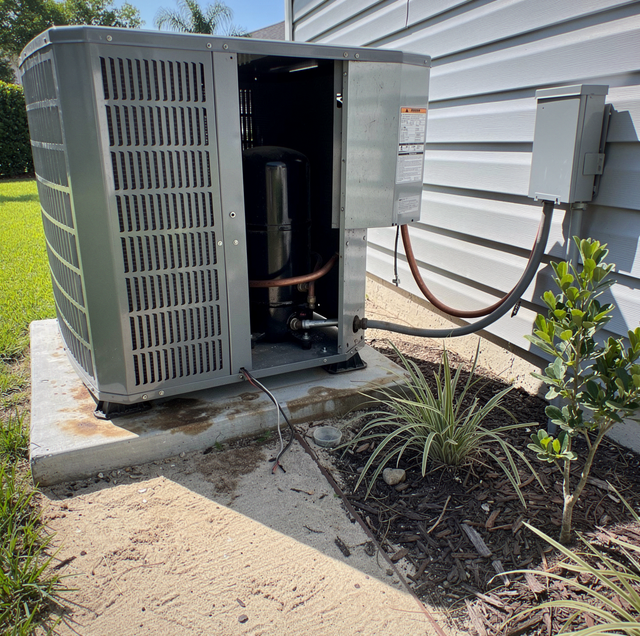
A compressor failure has a way of turning a routine service call into a much bigger conversation. The compressor is the part of the system that actually moves refrigerant through the cooling cycle, and when it stops working, the air conditioner stops cooling, full stop. There's no partial fix that gets a homeowner halfway there. The technician has to answer one question directly: does this system get a new compressor, or does the whole outdoor unit get replaced? That question deserves more thought than most people give it, because the honest answer depends less on the compressor itself than on everything around it.
What a Compressor Failure Actually Signals
A compressor rarely fails out of nowhere. It's a sealed, heavily built component designed to run for years without so much as being opened up, so when one does fail, it's usually because something upstream pushed it past what it could handle. Low refrigerant charge from an undetected leak, a failing capacitor that made the compressor struggle to start, restricted airflow that ran the system hotter than it should, or a power surge that damaged internal windings are all common triggers. That matters for the repair-or-replace decision, because a compressor that failed for a reason still present in the system is a compressor that could fail again, new part or not. Part of an honest assessment is figuring out whether the failure was an isolated event or a symptom of a system that's been under strain for a while.
The Two Questions to Settle Before Repair or Replacement Even Comes Up
Before comparing costs or efficiency, two facts need to be on the table: how old is the system, and is the compressor still under any kind of warranty coverage? Everything else in the decision builds on those two answers, and skipping past them is how homeowners end up paying for a repair on a system that was already close to the end of its useful life, or paying for a full replacement when a warranty would have covered most of the parts cost.
System age matters because a compressor is built to last close to the expected lifespan of the whole system it came with, generally somewhere in the range of twelve to fifteen years for most residential air conditioners. A compressor that fails at year six or seven is failing well ahead of schedule, which points toward an isolated cause worth fixing. A compressor that fails at year fourteen is arriving almost exactly on time, and the rest of the system- the coil, the blower motor, the electrical components- is aging right alongside it.
Warranty status matters because manufacturers typically cover the compressor itself for longer than they cover labor, and that coverage can shift the entire cost equation, even on a system that's a decade old. A compressor still inside its parts warranty window turns a normally expensive repair into one where the homeowner mostly pays for labor and refrigerant, not the part itself.
Comparing Repair to Replacement Factor by Factor
| Factor | Points Toward Repair | Points Toward Replacement |
|---|---|---|
| System age vs. typical compressor lifespan | System is well inside its expected lifespan window | System is at or past the age where major components typically start failing |
| Warranty status | Compressor is still covered under a manufacturer parts warranty | Warranty has expired, or was voided by missed maintenance |
| Relative cost of the fix | Repair cost is a modest fraction of what a full system would run | Repair cost approaches what a new, more efficient system would cost |
| Refrigerant type compatibility | System uses a refrigerant still in common production and supply | System uses an older refrigerant that's being phased out or getting harder and pricier to source |
| Efficiency of the current system | Existing system already runs at a reasonably efficient rating | Existing system is well behind current efficiency standards |
| Broader system condition | Compressor failure appears to be an isolated event | Compressor failure follows other recent repairs or shows signs of a strained system |
No single row in that table decides anything by itself. A system that's only seven years old but uses an aging refrigerant blend, for instance, might still lean toward repair if parts and refrigerant are readily available and the rest of the equipment is sound. The table works best for seeing how many rows point in the same direction, since two or three factors lining up toward replacement usually means the reasoning is solid, not a coincidence.
Why System Age Carries So Much Weight
Age matters more than almost any other factor because a compressor doesn't fail in isolation from the surrounding equipment. The blower motor, the coil, the electrical contactors and capacitors, and the outdoor fan motor are all aging on roughly the same clock. A compressor replaced at year seven usually goes back into a system with plenty of working life left in every other component. A compressor replaced at year thirteen goes back into a system where the next failure, whether that's the blower motor, a coil leak, or a failing fan, is arguably closer than most homeowners expect. Paying for a new compressor only to have another major part fail within a year or two is one of the most common regrets in this decision, and age is the single best predictor of how likely that is.
Warranty Coverage Can Change the Math Before Cost Even Enters the Conversation
A compressor still under a manufacturer's parts warranty changes the calculation before anyone even talks about relative cost. Parts warranties on compressors often run longer than the rest of the system, sometimes covering the compressor itself for a decade or more, even after other component warranties have lapsed. When that coverage is active, a repair mostly involves labor, refrigerant, and any incidental parts needed to correct whatever caused the failure in the first place, rather than the compressor itself. That can make repair the clear answer even on a system in its second decade, provided the rest of the equipment is holding up. The catch is that warranty coverage is frequently tied to proof of regular maintenance, registration at the time of installation, or the original purchaser remaining the owner of record, so confirming active coverage takes an actual records check rather than an assumption based on age alone.
Refrigerant Type Complicates the Decision on Older Systems
Refrigerant type is one of the most overlooked factors in this decision, and it applies almost entirely to systems old enough to still use a refrigerant that's being phased out of production. Replacing a compressor on a system using an older refrigerant blend still requires that same refrigerant to operate, since compressors are matched to a specific type and pressure range. As older refrigerants become harder to source and their supply tightens, the cost and availability of servicing that system going forward, not just this one repair, becomes part of the decision. A system already running a widely available refrigerant doesn't carry that concern, and a compressor repair on that kind of system is a cleaner, more contained decision than the same repair on an older unit facing a shrinking refrigerant supply for years to come.
Efficiency Gains a Repair Simply Can't Deliver
Replacing a compressor restores a system to its original capacity, nothing more. If the system was a mid-efficiency model when it was installed, a new compressor returns it to mid-efficiency performance, not an upgrade. A full system replacement, on the other hand, brings in equipment built to current efficiency standards across the board: the compressor, the coil design, the blower's variable-speed capability, and the overall refrigerant circuit are all engineered together for the numbers on the label. That gap gets more meaningful the older the existing system is, since equipment from a decade or more ago was often built to standards well below what's common in new equipment today. A homeowner keeping a system past its expected life through repair after repair may be maintaining a level of running cost that a full replacement would meaningfully reduce, even setting aside the compressor question entirely.
How Often a Compressor Failure Points to a Bigger Problem
A compressor rarely fails as a truly isolated event, and figuring out why it failed matters as much as deciding what to do about it. A compressor that seized due to a refrigerant leak elsewhere in the system will fail again on a replacement part unless that leak is found and sealed first. A compressor that burned out due to prolonged airflow restriction, a clogged coil, or a failing blower will face the same strain again unless the root cause is addressed alongside the repair. A compressor damaged by an electrical event, a failing capacitor, or a power surge points toward checking the rest of the electrical components for similar stress. Recognizing when a compressor failure is the second or third significant repair a system has needed recently is often the clearest signal that repair is only buying a little time rather than fixing what's actually wrong.
Getting an Honest Assessment Before Deciding
The most reliable way to approach this decision is to have a technician establish two things before any cost discussion: the system's exact age and installation date, and whether the compressor is still covered under any active manufacturer's warranty. Both of those facts are usually pulled from the equipment's model and serial number rather than guessed at, and both can change the entire direction of the decision before efficiency, refrigerant type, or the broader condition of the system ever come up. A technician who checks age and warranty status first, rather than quoting a repair price on the spot, gives a homeowner a decision grounded in the system's actual standing rather than in how urgent the situation feels in the moment. Since a failed compressor usually means no cooling at all, that pressure to decide fast is real, but the two-question check takes only a few minutes and can save a homeowner from either an unnecessary full replacement or a repair on a system that was never going to make it much further anyway.
Frequently Asked Questions
Most residential compressors are built to last close to the system's overall expected lifespan, roughly twelve to fifteen years. A failure well before that range, particularly inside the first decade, is generally considered premature and worth investigating for a root cause rather than being treated as ordinary wear.
Technically, a compressor can sometimes be swapped for a compatible aftermarket unit, but matching the exact refrigerant type, pressure range, and electrical specifications to the rest of the system is exacting work, and a mismatch can shorten the life of the replacement part or reduce cooling performance.
Often yes. A newly installed compressor typically carries its own warranty period from the date of the repair, separate from whatever coverage remains on the rest of the system, though the length and terms vary by manufacturer and installer.
It depends entirely on whether the original cause was corrected. A compressor replaced after a properly diagnosed and resolved issue, such as a sealed refrigerant leak or a corrected airflow restriction, has no particular reason to fail again ahead of schedule. One replaced without addressing the root cause carries the same risk that took out the original.
Sometimes, particularly on a system where the indoor components are newer than the outdoor unit or were replaced separately at some point. A technician can confirm whether the indoor coil is compatible with newer outdoor equipment and refrigerant type before recommending that route.
There's rarely a need to decide within the same visit. A short delay to confirm warranty status, pull the system's exact age, and get a second read on the cause of the compressor's failure is time well spent, since the goal is an accurate assessment rather than the fastest possible decision.
Schedule a compressor diagnostic — get an honest read on age, warranty status, and repair cause before deciding what to do next. CMB Air serves Tampa and the Tampa Bay area. Call (813) 447-1443.
