
What to Check on Your AC After a Storm or Flood: A Safety Checklist
Walking Outside Once the Wind Dies Down
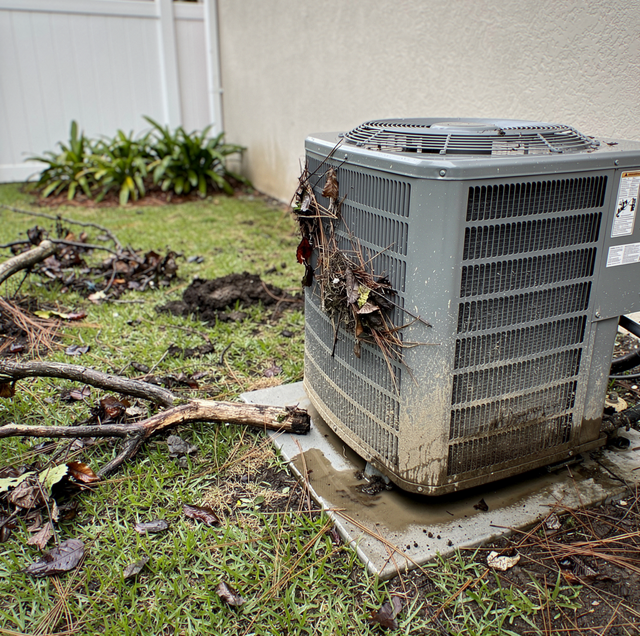
The rain has stopped; the yard is a mess of leaves and broken branches, and a few inches of standing water still pool against the side of the house. The outdoor condenser sits right in the middle of it, half-submerged, with a ring of muddy silt marking how high the water rose overnight. Nothing looks obviously broken. No sparks, no smoke, no dramatic damage. It just sits there, quiet, coated in grime, and the next question is simple: is it safe to flip it back on and see if it still cools?
That question is worth slowing down on. A unit that got wet during a storm isn't the same as one that got dusty over a season, and the checks that matter here differ from routine maintenance. What follows is what to actually look at, what to leave alone, and when a visual check is enough versus when the whole thing needs professional eyes before it runs again.
The First Look Is a Visual Check Only
Before anything else: this is an inspection done with your eyes, from a distance, not a hands-on repair job. If the outdoor unit sat in standing water, or you're not sure it did, treat it as compromised until a qualified professional confirms otherwise. Don't open the electrical panel. Don't reach into the cabinet to clear debris. Don't flip the breaker back on just to "see what happens." Water and low-voltage control wiring inside a sealed compartment aren't a combination to test by trial and error, and a unit that looks fine from three feet away can still have silt and moisture sitting against components you can't see.
If there's any doubt at all about how high the water rose or whether the unit was fully submerged, shut off power at the breaker serving the outdoor unit before you do anything else, including walking closer to it in standing water yourself. That single step removes the electrical risk while you sort out the rest.
Signs the Outdoor Unit Took on Water
A few things tend to show up after a unit has been sitting in floodwater, even once the water has receded:
A silt line on the cabinet: Mud and debris carried by floodwater leave a visible waterline as the water recedes, usually a band of dried grit ringing the panel a few inches above the base. That line indicates roughly how high the water reached, which matters more than whether the water is still visible now.
Debris packed into the coil fins: Leaves, small branches, and grass clippings get pushed into the thin aluminum fins wrapping the outdoor coil. Even without flooding, this buildup blocks airflow across the coil, and it's worth checking on every unit in a storm's path, not just ones that sat in standing water.
Standing water still in the base pan: Some cabinets hold a bit of water at the bottom even after the yard has drained, especially in low spots. Water touching the base of the compressor or wiring is a stronger signal that inspection should come before any attempt to restart.
Corrosion starting on metal surfaces: Storm surge and floodwater usually carry more than fresh rainwater; runoff picks up whatever it passes through on the way, and that residue accelerates rust on screws, panel edges, and any exposed metal almost immediately. A unit that looks freshly rusted after one storm, rather than gradually over a season, is a sign the water it sat in wasn't clean.
None of these signs, on their own, tell you exactly what's damaged underneath. They tell you where to point a technician's attention.
Why Wet Electrical Components Don't Get a Pass
The instinct to just try the unit and see is understandable, since it's the fastest way to find out if everything still works. But a compressor, capacitor, and control board sitting inside that outdoor cabinet aren't built to be submerged and then powered up. Think of it the way you'd think about a car that spent the night in floodwater: nobody turns the key and hopes for the best, because water against wiring and connectors can create paths for current to travel where it was never meant to go. The only way to know it's safe is to have someone check what's underneath first, not by testing it and seeing what happens.
Moisture trapped against a control board or inside a compressor terminal box doesn't always announce itself with a spark, either. Sometimes the unit runs for a few minutes and then trips a breaker, or fails days later once corrosion that started during the flood works through a connection. That delay is exactly why a visual check followed by a professional inspection, rather than a quick test run, is the safer sequence.
What to Check Indoors: Air Handler, Ducts, and Vents
Flooding and storm damage aren't just an outdoor unit problem. If the air handler lives in a garage, closet, or lower level that took on water, or if wind-driven rain got past a damaged roof vent or attic opening, the indoor equipment needs its own look.
Walk through and check for water stains spreading from a vent or return grille, since that pattern usually means water got into the ductwork rather than just dripping through the drywall. Check whether the area around the air handler smells musty or damp, as this can appear before any visible staining. If the unit sat in a space with standing water at any point, even an inch or two, treat it the same way as the outdoor unit: don't power it on; let it be checked first. Ductwork that ran through an attic during heavy wind-driven rain is worth the same look, particularly where duct sections meet a boot or register; a section that stayed damp for several days sets up a musty smell that shows up weeks later rather than an immediate one.
Clearing loose debris from the top and sides of the outdoor cabinet without opening any panels is reasonable for you to do yourself. Anything packed into the fins is better left to a technician, since fins bend easily and a bent fin restricts airflow.
A Storm Doesn't Have to Flood a Unit to Damage It
Outdoor equipment in a climate with regular tropical storm exposure already carries a baseline level of stress that milder climates don't see. Salt-carrying air gradually corrodes coil fins and cabinet metal over time, even on a dry, sunny day, and that corrosion accelerates sharply after a storm surge or floodwater brings in a heavier dose of salt and debris residue all at once. A unit that's already been through a few storm seasons has a head start on corrosion before this particular storm even arrives.
Lightning is a separate risk worth a quick mention, even though it's a different mechanism than water exposure: a strike near the property, or one hitting a utility line down the street, can send a damaging voltage spike into the compressor and control board without any water ever touching the unit. If the power flickered or went out and the unit refuses to start once it's restored, treat that as its own inspection, separate from the flood check, since a surge and a soaked cabinet call for different questions from a technician.
What Not to Do Before a Technician Looks at It
A short list is easier to hold onto than a long one: don't restore power at the breaker if the unit was in standing water or you're unsure. Don't hose off the electrical compartment to "clean it up" before someone qualified looks at it. Don't remove access panels yourself. Don't run the indoor air handler if it sat in a flooded space. And don't assume that because the unit looks dry on the outside now, it's dry inside too; cabinets shed rain; they don't drain floodwater quickly from every internal cavity.
Getting the System Back Online the Safe Way
Once a technician is involved, the process moves from "wait and look" to an actual inspection: checking for moisture and corrosion inside the electrical compartment and confirming the compressor and control board are safe to energize, rather than guessing. If the home lost power for an extended stretch during cleanup, it's also worth having the ductwork and vents checked for mold, since a humid climate combined with a system sitting idle for days gives mold a head start that a glance from the floor won't catch. A whole-home dehumidifier or a UV light near the coil are options some homeowners add afterward if humidity and mold become recurring problems in that space.
A storm doesn't ask permission before testing every piece of equipment outside a home, and the outdoor condenser is usually the least protected of all. Standing water, packed debris, and a stray voltage spike are three different problems that can all show up after the same storm, and telling them apart from a distance, without touching anything, is what keeps a bad storm from becoming a bigger repair than it needed to be.
Frequently Asked Questions
There's no fixed safe window, but corrosion and moisture start working on exposed metal and wiring within the first day, especially with silt-heavy or salt-carrying floodwater rather than clean rain. A unit inspected within a day or two generally has a better shot at a simple repair than one left sitting for a week while cleanup elsewhere takes priority.
Yes, before clearing debris or wiping down the cabinet. Photos of the silt line, debris packed into the coil, and the unit's general condition give a technician and an insurance adjuster a record of what the equipment looked like right after the storm, harder to reconstruct once mud is hosed off, or leaves are cleared away.
Not necessarily. A coil coated in mud that is caught within a day or two can sometimes be cleaned and tested rather than replaced, since the fins may still be structurally sound beneath the grime. Mud left to dry and bake onto the fins for an extended stretch is a different story, since it becomes harder to fully clear and traps moisture against the metal long after the storm passes.
The same shut-off-and-inspect approach applies to a ductless system's outdoor compressor unit, but there's an added spot to check indoors: the wall-mounted head, particularly if it sits near a window or exterior wall that took wind-driven rain. Water pushed behind an indoor mini-split head can sit against its internal components in a way that isn't visible from the front panel.
It's still worth a look, and normal cooling isn't proof nothing got in. A system can keep cooling the house fine even while water sits in a section of attic ductwork, since airflow and temperature don't reveal a wet duct seam the way they'd reveal a clogged filter. Ruling out an attic leak after wind-driven rain means actually looking at the access panel and duct connections, not judging by how the house feels.
Yes, and the timeline is shorter than most expect: in a hot, humid climate, mold can start colonizing ductwork within roughly one to two days once a system sits idle and indoor humidity climbs unchecked. A musty smell isn't a reliable early warning either, since growth can start behind a return grille before it's noticeable in the room, which is why an idle system after an extended outage is worth checking the vents for, not just a sniff test at the thermostat.
Storm cleanup asks a lot of a household at once, and the AC is easy to push to the bottom of the list once the roof and yard get attention first. A visual check the same day, followed by a professional inspection before the system runs again, is what keeps a soaked or debris-packed unit from turning a repair into a full replacement.
Schedule a post-storm AC inspection — have your indoor and outdoor equipment checked for water damage, debris, and corrosion before you power it back on. CMB Air serves Tampa and the Tampa Bay area. Call (813) 447-1443.
