
What Is a SEER Rating? The Number That Sets Your Cooling Bill
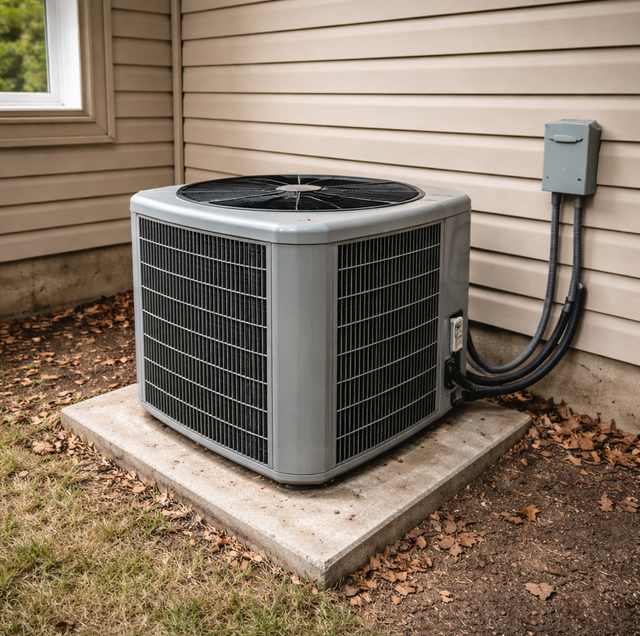
Quick Answer: SEER (Seasonal Energy Efficiency Ratio) measures how much cooling a system delivers for every unit of electricity it uses across a full season. A higher SEER means more cooling per watt, so the same comfort costs less to run. The rating only holds up if the equipment is sized, installed, and maintained correctly.
What the SEER Number Actually Measures
SEER stands for Seasonal Energy Efficiency Ratio. It is a single number that describes how efficiently an air conditioner or heat pump turns electricity into cooling over an entire cooling season, not at one fixed condition. The math is a ratio: total cooling output (measured in British thermal units) divided by total electrical energy consumed (measured in watt-hours) across a range of outdoor temperatures.
Read it the way you read miles per gallon on a car. A vehicle rated for more miles per gallon goes farther on the same tank; a system with a higher SEER produces more cooling on the same amount of electricity. Two systems can both keep a house at the same temperature, yet the higher-SEER unit does it while pulling less power from the meter. Over months of runtime, that gap shows up on the electricity bill.
The keyword is "seasonal." Older efficiency figures were taken at a single test point. SEER averages performance across varying loads, which is closer to how a system really behaves, since it rarely runs flat-out at peak conditions. Most of its hours are spent at partial load on milder days.
Higher SEER, lower running cost, for the same cooling: Hold the cooling job constant and raise the SEER, and the running cost falls. That is the entire value of the number. It does not make a room colder or quieter on its own; it tells you what that cooling costs to produce. A system rated far above the minimum can trim a meaningful slice off the portion of your bill tied to cooling, which is why the figure matters when comparing equipment.
SEER vs SEER2: The Newer Test Standard
You will now see two numbers on spec sheets: SEER and SEER2. They describe the same idea, but they come from different laboratory tests.
SEER2 replaced the original SEER testing procedure for new equipment. The change was not to the equipment definition but to the test conditions. SEER2 measurements are taken against higher external static pressure, meaning the test now assumes more resistance in the ductwork, closer to what a real home imposes on the blower. The old test ran under gentler conditions that flattered the numbers.
Because the test got tougher, a given piece of equipment carries a slightly lower SEER2 figure than its old SEER figure, even though nothing physical changed. A unit that once read as one SEER value reads a little lower under SEER2.
Do not compare a SEER2 figure against an older SEER figure as if they used the same scale. Because the newer test runs against tougher conditions, the same equipment reads slightly lower under SEER2, so lining up an old number against a new one makes newer gear look worse than it is.
Heating counts too, not just cooling: Efficiency is a two-sided story for a heat pump, which both cools and heats. On the cooling side, you look at SEER2. On the heating side, you look at HSPF2 (the Heating Seasonal Performance Factor under the updated test), which rates how efficiently the same unit delivers heat. A heat pump is bought as a year-round appliance, so a strong SEER2 paired with a weak heating rating tells only half the story. Read both numbers together, because the unit works in both directions across the year.
What a High SEER Is Worth, and Where It Stops Paying
Efficiency ratings climb well past the legal minimum, and the temptation is to assume more is always better. It is better, up to a point, and then the returns thin out.
The relationship between rating and price is not linear. Moving from a low rating to a mid-tier rating usually buys a large efficiency gain for a modest step up in equipment cost. Climbing from a high rating to a very high one buys a smaller efficiency gain for a much higher cost, because top-tier systems use premium compressors, larger coils, and more electronics. At some point, the extra money spent up front takes many years of savings to earn back, longer than some homeowners keep the equipment.
Where that break-even lands depends on how many hours the system runs each year, local electricity rates, and how long you plan to stay in the home. A house that runs its cooling for a large share of the year recovers a high-SEER premium faster than one that barely uses it. This is a judgment call worth having with an installer who can model your actual runtime rather than a generic assumption.
The rating is a ceiling, not a promise: Here is the part that catches people off guard. The SEER on the box is the best the equipment can do under lab conditions. In your house, the number you actually get is capped by the installation. A high-rated system installed badly will underperform a modest system installed well. The rating sets the ceiling; the install decides how close you get to it.
Why the Install Decides How Much Rating You Keep
A high-SEER system is only as good as the four things surrounding it: correct sizing, quality installation, sealed ducts, and ongoing maintenance. Miss any one, and you are paying for a rating you will never see.
Sizing: A system too large for the space short-cycles, snapping on and off before it can run efficiently or pull humidity out of the air. A system too small runs constantly and never catches up. Correct sizing comes from a load calculation for the specific home, not a guess based on square footage. This is licensed HVAC work.
Installation quality: Refrigerant charge, airflow setup, and connections all have to be right. An incorrect charge alone can quietly erode efficiency and shorten the compressor's life. Refrigerant handling is EPA-certified work by law, not a DIY task.
Duct sealing: Ducts that leak into an attic or crawlspace dump conditioned air where nobody lives. Leaky ducts can waste a large fraction of what the system produces, and no rating on the outdoor unit recovers air that never reaches the rooms. Sealing and balancing the duct system protects the efficiency you paid for.
Maintenance: A clogged filter, a dirty coil, or a low charge drags a high-SEER system down toward the performance of a cheap one. Changing the filter on schedule is a homeowner-safe job. Coil cleaning, charge checks, and electrical service are technician work.
Compressor Stages: Efficiency and Comfort Together
The compressor is the heart of the outdoor unit, and how it runs shapes both efficiency and comfort. There are three broad types.
Single-stage compressors run at one speed: full blast or off. They are the simplest and least expensive, but they cool in hard bursts and cycle on and off, which does less to control humidity and can leave temperature swings between cycles.
Two-stage compressors have a high setting and a lower one. Most of the time they run on the lower stage, which is quieter, steadier, and better at wringing moisture out of the air, stepping up to full power only on the hottest demand. That longer, gentler runtime tends to improve both efficiency and comfort.
Variable-speed compressors modulate across a wide range, matching output precisely to demand. By running long and slow at low power most of the time, they hold temperature and humidity very steadily and reach the highest efficiency ratings. They cost the most and rely on more electronics. The steady, low-speed runtime is also what gives them their strong humidity control, since moisture removal depends on runtime, not blast.
Higher stages generally pair with higher SEER2 ratings, but the comfort side, especially humidity control, is often the bigger day-to-day difference a household actually feels.
Minimum Standards Change by Region and Over Time
There is no single national efficiency floor that lasts forever. Federal minimums for new cooling equipment have ratcheted upward over the years, and they differ by region. Warmer regions carry higher minimum ratings than cooler ones, on the logic that equipment there runs far more hours and the efficiency gain pays off. Those floors also get revised on a schedule, so the minimum legal rating today is not what it was a decade ago and not what it will be later.
The practical takeaway: the "minimum" a contractor can legally install depends on where you live and when you buy. A qualified local installer will know the current floor for your area and can steer you to equipment that clears it while fitting your runtime and budget.
Frequently Asked Questions
No. SEER measures efficiency, not cooling power. A 20-SEER and a 14-SEER system of the same tonnage remove the same amount of heat; the higher-SEER one just uses less electricity to do it. Comfort differences you feel between systems usually come from the compressor stage and airflow design, not the SEER number itself.
A ton is a unit of cooling capacity equal to 12,000 BTU per hour, dating back to the cooling power of a ton of melting ice. Tonnage tells you how much heat a system can move; SEER tells you how efficiently it moves it. You size tonnage to the home's load first, then choose a SEER within that size; the two are separate decisions.
Often, yes. Sealing duct leaks, replacing a clogged filter, cleaning the outdoor coil, and correcting a low refrigerant charge can each recover efficiency the system lost over time. These restore the rating you already own rather than raising it. Filter swaps are homeowner-safe; coil, charge, and duct work belong to a technician.
A well-installed and maintained residential system commonly runs in the range of 12 to 15 years, sometimes longer. That lifespan matters for the SEER math: a very high rating whose payback period stretches near the end of the equipment's life may never fully recover its extra cost before replacement time arrives.
Yes. The rating belongs to a matched system: the outdoor condenser and the indoor coil and air handler tested as a pair. Bolting a new high-efficiency outdoor unit onto an old, mismatched indoor coil voids the rated performance. AHRI-matched pairings are what carry the published SEER2 figure.
If the bill is the only concern, a solid two-stage unit often captures most of the efficiency gain for less money than a variable-speed one. Variable-speed earns its premium more through comfort and humidity control than through raw savings. The right pick depends on your runtime hours and how much steady humidity control matters to your household.
Not sure which SEER rating fits your home and runtime? Get a load calculation and an honest recommendation. CMB Air serves Tampa and the Tampa Bay area. Call (813) 447-1443.
