
Water Pooling Around Your Indoor AC Unit? What’s Wrong
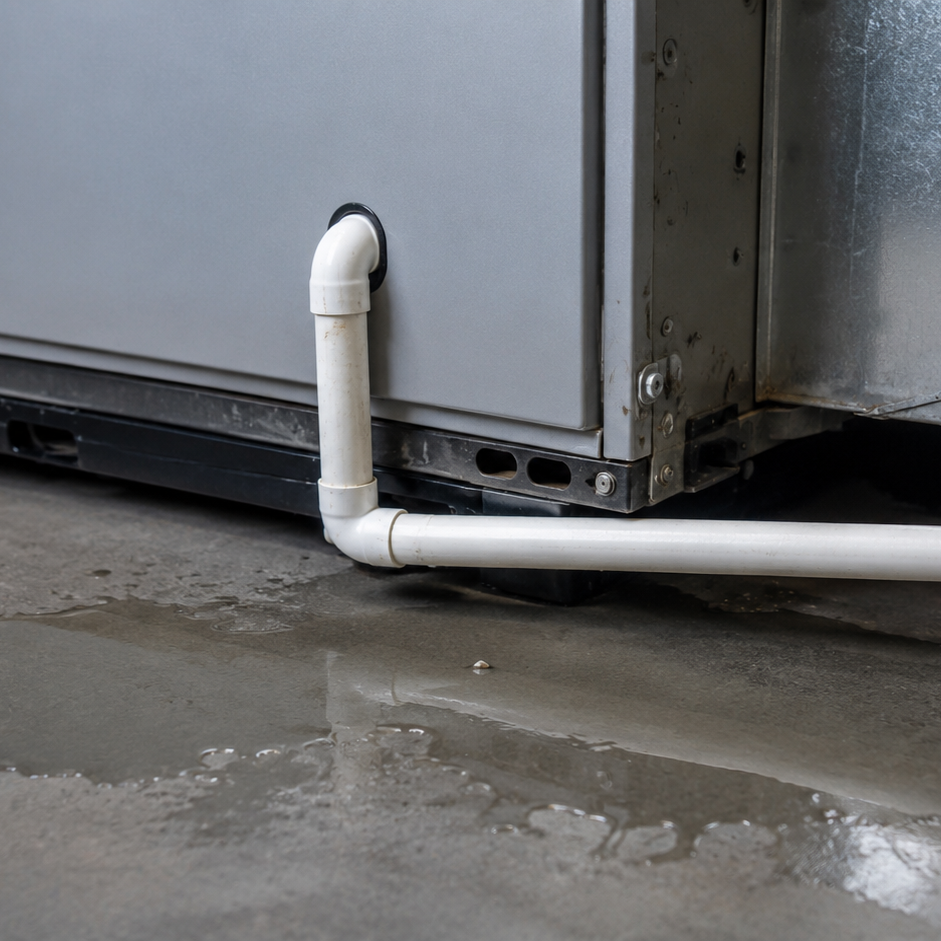
Quick Answer: Water pooling around your indoor air handler almost always means the condensate your AC normally drains away isn't getting out. The top cause is a clogged condensate drain line, followed by a cracked or overflowing drain pan, a frozen evaporator coil that melted, or a disconnected drain line. It's not just a mess — standing water can damage floors and feed mold. Shut the system off to stop the leak, and clear or repair the drain. In Florida's humidity, a clogged drain line is especially common.
Your air conditioner makes a surprising amount of water — that's normal. As it cools, it draws moisture from the air, and that moisture is supposed to drain harmlessly away. So a puddle around the indoor unit doesn't mean the AC sprang a leak so much as that its drainage has failed somewhere. Finding out where it is usually quick, and stopping the water early, keeps a small problem from becoming water damage and mold.
Where the Water Comes From
As warm, humid air passes over the cold evaporator coil inside your air handler, moisture condenses on the coil — exactly like droplets forming on a cold glass. That condensate drips into a pan beneath the coil and flows out through a condensate drain line, usually a PVC pipe that carries it outside or to a drain. When everything works, you never see it. When water pools on the floor, it means that condensate isn't making it out, and it's overflowing instead.
The Usual Causes
A Clogged Condensate Drain Line
This is the number-one cause. The drain line is a damp, dark tube, and over time, it grows algae and collects dust and slime that clog it. When it backs up, the condensate has nowhere to go, so the pan overflows onto the floor. In a humid climate like Tampa's, the AC pulls out a lot of moisture, and the drain works hard, so clogs are very common. Many systems have a safety float switch that shuts the AC off when the drain backs up — if your system keeps shutting down, a clogged drain is a prime suspect.
A Full, Cracked, or Rusted Drain Pan
The pan that catches the condensate can crack, corrode, or rust through with age, so water drips past it instead of draining. An overflowing pan from a downstream clog looks the same from the floor. Either way, water ends up where it shouldn't.
A Frozen Coil That Melted
If the evaporator coil freezes — usually due to a dirty filter, low airflow, or low refrigerant — it builds up ice, and when the system cycles off, that ice melts all at once, overwhelming the pan and drain and spilling water. A puddle that comes and goes, paired with weak cooling, points this way.
A Disconnected or Sloped-Wrong Drain Line
A drain line that's come loose, cracked, or wasn't sloped properly can leak or fail to carry water away, leaving it to pool near the unit.
| What you see | Likely cause | What to do |
|---|---|---|
| Steady puddle, AC keeps shutting off | Clogged drain line (float switch tripping) | Clear the drain line |
| Water under the unit, pan looks rusty | Cracked or corroded drain pan | Replace the pan |
| Puddle comes and goes, weak cooling | Frozen coil melting | Check filter; call a tech |
| Water near a loose pipe | Disconnected/poorly sloped drain | Reconnect/re-slope the line |
What to Do
First, turn off the system to stop producing more condensate and prevent further water damage, then mop up any standing water before it reaches the flooring or drywall. Check and replace a dirty air filter, since that's a common cause of a frozen coil. You can sometimes clear a clogged drain line yourself — many units have an access point, and you can use a wet/dry vacuum at the outside end to pull the clog out.
Beyond that, it's usually a job for a technician: clearing a stubborn drain clog properly, replacing a cracked pan, diagnosing a frozen coil (which can mean low refrigerant), or fixing a drain line that's not draining right. Don't ignore it — standing water around an air handler damages floors and ceilings and creates exactly the damp conditions mold loves, which is a bigger concern in a humid climate. Regular drain-line maintenance is the best prevention, since the line will clog again if it's never cleaned.
It helps to think of the condensate system as something that needs upkeep, not a set-and-forget part of the AC. The drain line is constantly damp and runs through warm spaces, creating the perfect environment for algae and slime that cause clogs to grow back. A simple habit of having the line flushed and treated during routine AC maintenance keeps it flowing, and catching a rusting pan or a refrigerant issue early during those visits prevents the kind of surprise puddle that shows up on the hottest day of the year, when you can least afford for the system to shut itself down.
Frequently Asked Questions
Because the condensate your AC pulls out of the air isn't draining away properly. The most common reason is a clogged condensate drain line that backs up and overflows the pan. Other causes are a cracked or rusted drain pan, a frozen evaporator coil that melted, or a loose or poorly sloped drain line. Turn the system off and clear or repair the drain.
It's worth addressing quickly. The water itself can damage flooring, drywall, and ceilings, and the damp conditions around an air handler are exactly what mold needs to grow — a bigger risk in a humid climate. Many systems shut off automatically when the drain backs up to prevent overflow. Stopping the water and clearing the cause early keeps a minor issue from becoming costly damage.
Often, yes. Many units have an access point on the drain line, and you can pull the clog out by attaching a wet/dry vacuum to the outside end of the line. Replacing a dirty filter also helps prevent the frozen-coil version of the problem. If the clog won't clear, the pan is cracked, or the coil keeps freezing, that's the point to call a technician.
Many air handlers have a safety float switch that shuts the system off when the condensate drain backs up, so the pan doesn't overflow. If your AC keeps cutting out and you find water near the unit, a clogged drain line tripping that switch is the likely cause. Clearing the drain usually lets the system run normally again.
Keep the condensate drain line clear with regular maintenance, since it naturally grows algae and slime and will clog again if neglected. Change the air filter regularly to prevent the coil from freezing, and have the system checked periodically so a cracked pan or refrigerant issue is caught early. In a humid climate, drain-line upkeep is especially important because the AC removes so much moisture.
Stop the Water, Then Clear the Drain
Water pooling around your indoor AC isn't a leak so much as a drainage failure — the moisture the system normally carries away is backing up, usually from a clogged condensate line. Shut the unit off, dry the water before it damages anything, and clear or repair the drain. In Tampa's humidity, the drain line works overtime and clogs easily, so making drain maintenance a routine is what keeps puddles from returning.
Finding water around your indoor AC? — Get the drain cleared and the cause fixed before it damages your floors. CMB Air serves Tampa and the Tampa Bay area. Call (813) 447-1443.
