
The Science Behind Duct Fogging: How It Improves Indoor Air Quality in Tampa, FL
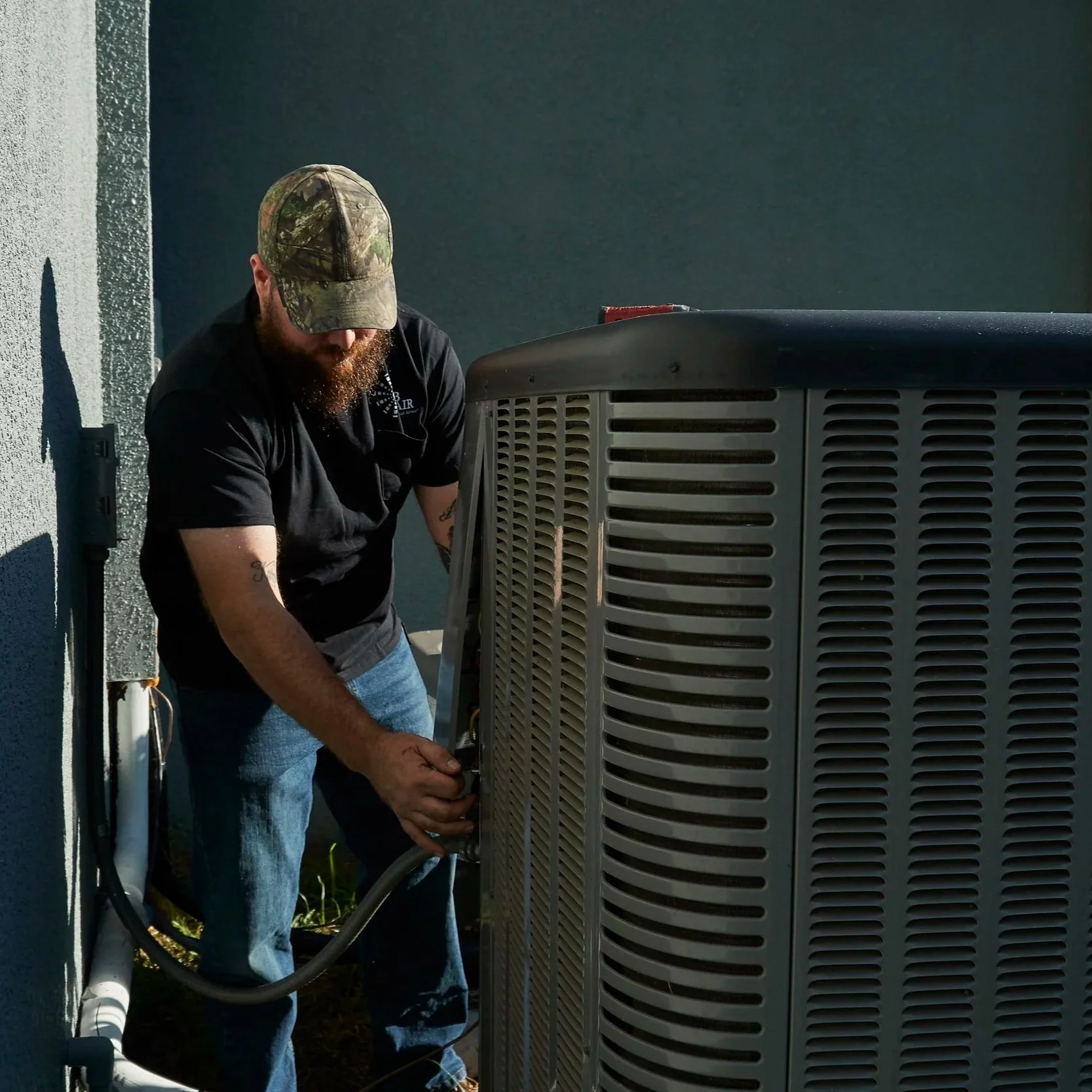
Moisture, dust, and organic particles accumulate inside Tampa HVAC ducts, creating ideal conditions for mold growth and poor indoor air quality.
How Contaminants Accumulate Inside HVAC Duct Systems
Air conditioning systems move enormous volumes of air through ductwork every day, and that air always carries something with it. Dust particles, microscopic skin cells, pollen, moisture vapor, and trace organic matter all travel through the system repeatedly. In Tampa, Florida, where air conditioning runs for much of the year, that circulation happens almost nonstop. Over time, some of those particles settle along duct walls, particularly at seams, bends, and low velocity zones where airflow slows just enough to allow material to cling to interior surfaces. Moisture in the air makes that process easier by helping particles adhere rather than bounce back into circulation.
Once material settles, it does not remain inert. Organic particles interact with humidity, creating a surface environment that supports microbial activity. Mold spores already present in the air can anchor themselves, bacteria can multiply, and odor-causing compounds begin to form. These processes occur quietly and invisibly, which explains why many homes with clean living spaces still experience persistent indoor air quality complaints. Duct interiors act as sheltered microenvironments where temperature and moisture fluctuate less dramatically than open rooms. Without direct intervention, those conditions continue to compound over time, contributing to odors, irritation, and degraded air quality, even when filters are changed regularly, and visible system components appear well-maintained.
What Duct Fogging Does at a Microscopic Level
Duct fogging works by altering the chemical and biological conditions on interior duct surfaces rather than removing material physically. The fog consists of extremely small particles designed to remain airborne long enough to travel throughout the duct network. As the HVAC fan moves air, those particles follow the same paths as normal airflow, allowing them to reach areas that mechanical tools and vacuums cannot access. When the fog settles, it coats interior surfaces evenly rather than concentrating in one location.
At a microscopic level, fogging agents interact with organic compounds and microbial colonies present on duct walls. Depending on the formulation, the treatment may disrupt bacterial cellular processes, inhibit mold spore viability, or neutralize odor-producing molecules through chemical binding. These interactions reduce the ability of contaminants to persist and reproduce. Rather than masking odors or diluting contaminants temporarily, fogging alters the surface environment, making it less hospitable to ongoing biological activity. In Tampa’s humid climate, that shift can significantly slow the rate at which contamination redevelops when combined with proper moisture control.
Why Particle Size and Distribution Matter
The effectiveness of duct fogging depends heavily on particle size and distribution, which explains why technique and equipment matter so much. Fog particles must be small enough to remain suspended in the airflow long enough to reach the full length of the duct system. Larger droplets fall out of the air stream too quickly, leading to uneven coverage and localized saturation. Smaller particles behave more like a gas than a liquid, drifting through complex ductwork and gradually settling on surfaces.
Proper distribution also prevents oversaturation. In attic-mounted systems common throughout Tampa, excess moisture introduced into ductwork can create unintended problems by soaking insulation or pooling in low spots. Scientifically designed fogging equipment controls output volume and particle consistency to avoid those outcomes. The goal is to change surface conditions without adding a measurable moisture load. When executed correctly, fogging alters biological activity without introducing new environmental stressors that could undermine indoor air quality rather than improve it.
The Role of Humidity in Tampa Indoor Air Quality
Humidity plays a central role in indoor air quality throughout Tampa, Florida, and it directly influences how duct fogging performs. High humidity supports microbial growth by keeping surfaces sufficiently damp for organisms to thrive. Even when indoor humidity appears comfortable, duct interiors may experience condensation during cooling cycles as warm air contacts cooler surfaces. That moisture creates ideal conditions for biological activity inside ducts, particularly during shoulder seasons when systems cycle intermittently.
Duct fogging addresses the biological side of that equation, but humidity remains the underlying driver. When fogging modifies duct surfaces, it reduces microbes' ability to exploit available moisture. However, if humidity remains uncontrolled, contamination eventually returns. Scientifically, fogging works best as part of a moisture management strategy rather than as a standalone fix. Homes with properly sized equipment, functional drainage, and balanced airflow tend to maintain fogging benefits longer because environmental conditions no longer favor rapid microbial regrowth.
How Fogging Influences Odor Formation and Persistence
Odors inside HVAC systems rarely originate from a single source. Instead, they develop when organic compounds accumulate and interact with microbial activity over time. Cooking residue, pet dander, smoke particles, and even building materials release compounds that settle inside ducts. Once embedded, those compounds produce odors whenever air passes over them, particularly during system startup or high humidity periods. Traditional cleaning removes loose debris but often leaves behind bonded residue.
Duct fogging alters odor dynamics by neutralizing those bonded compounds at the surface level. Some fogging agents chemically bind to odor-producing molecules, rendering them non-volatile and preventing them from entering the air stream. Others disrupt the microbial processes that generate odors in the first place. From a scientific perspective, fogging reduces odor persistence rather than covering smells temporarily. That distinction explains why fogging can reduce recurring odors that return quickly after cleaning or air freshening efforts.
Why Airflow Patterns Affect Fogging Results
Airflow patterns inside HVAC systems influence where fog travels and how evenly it settles. Systems with balanced airflow distribute fog consistently across all branches, while systems with restrictions or leaks may receive uneven treatment. In Tampa, homes that have undergone additions or partial duct modifications often experience airflow imbalances. These imbalances create areas where fog may not reach effectively without adjustment.
Professional application accounts for these variables by monitoring pressure and airflow during fogging. Scientifically, fog follows the same rules as air movement, meaning dead zones receive less exposure unless deliberately addressed. Understanding airflow behavior allows technicians to modify fan speeds or injection points to achieve more uniform coverage. Without that understanding, fogging becomes guesswork rather than a controlled process rooted in airflow science.
Interaction Between Fogging and HVAC Filtration
Filtration and duct fogging serve different but complementary functions within HVAC systems. Filters capture airborne particles before they circulate through ducts, reducing the volume of new material entering the system. Fogging addresses what remains inside the ducts after years of operation. Scientifically, filtration slows accumulation while fogging modifies existing surface conditions.
In Tampa environments where outdoor air introduces pollen and moisture regularly, filtration alone cannot prevent all contamination. Over time, even well-filtered systems develop surface level buildup. Fogging resets those surfaces, while filtration helps maintain the improved state. Viewing fogging and filtration as competing solutions overlooks their interactions. Together, they address both input and accumulation sides of the air quality equation, creating more stable indoor conditions than either approach alone.
How Duct Materials Influence Fogging Behavior
Different duct materials respond differently to fogging based on surface characteristics and porosity. Metal ducts present non-porous surfaces that allow fogging agents to coat evenly and remain active longer. Flexible ducts and internally lined systems introduce porosity, which can absorb small amounts of treatment if applied incorrectly. Tampa homes often feature a mix of materials due to renovations and phased system upgrades, making material assessment an important scientific consideration.
Proper fogging adapts to these differences by adjusting concentration and application time. Overapplication on porous materials increases moisture risk, while underapplication may reduce effectiveness. Understanding material science helps avoid those pitfalls. When fogging aligns with duct composition, treatments alter surface biology without compromising structural integrity, supporting long-term air quality improvement rather than short-lived results.
How Microbial Activity Inside Ducts Affects Indoor Air Quality
Microbial activity inside duct systems directly influences the quality of air delivered into living and working spaces. Mold spores, bacteria, and other microorganisms enter HVAC systems naturally through outdoor air, foot traffic, and everyday activities. Once inside, they settle on duct surfaces where moisture and organic matter provide the conditions needed for growth. In Tampa, Florida, warm temperatures and frequent humidity spikes keep these organisms active for long periods, rather than entering dormant cycles. As air moves across contaminated surfaces, microbial byproducts and fragments become airborne, contributing to odors and irritation.
From a scientific standpoint, the issue involves more than mere microbial presence. Metabolic byproducts produced during microbial growth include volatile organic compounds that readily disperse through airflow. These compounds often explain musty or sour odors that appear intermittently, especially when systems first start up after periods of inactivity. Duct fogging disrupts this cycle by altering surface chemistry and biological viability, reducing both microbial populations and the byproducts they release. Ignoring microbial activity allows these processes to continue compounding, gradually affecting indoor air quality even when temperature and airflow appear normal.
How Fogging Alters the Duct Surface Environment
The effectiveness of duct fogging depends on its ability to alter surface conditions rather than sterilize the system completely. Fogging agents interact with duct walls at a molecular level, creating an environment less favorable for biological adhesion and reproduction. Some treatments leave behind a thin residual layer that inhibits microbial attachment, while others disrupt cellular membranes or metabolic pathways directly. These changes reduce the likelihood that new spores or bacteria will establish themselves easily.
In Tampa’s climate, where moisture exposure cannot be eliminated, altering surface conditions becomes especially valuable. Fogging does not remove humidity from the air, but it reduces microbes' ability to exploit it once they land on duct surfaces. Scientifically, the approach shifts the balance away from rapid regrowth toward slower, more manageable accumulation. Over time, that shift translates into fewer odor events and reduced microbial contribution to indoor air quality degradation when combined with proper system maintenance.
Why Duct Fogging Complements Mechanical Cleaning
Mechanical duct cleaning and duct fogging address different layers of the same system. Cleaning removes physical debris that restricts airflow and harbors contaminants, while fogging modifies the biological and chemical conditions on remaining surfaces. From a scientific perspective, removing debris reduces available nutrients, while fogging reduces biological viability. In Tampa homes where ducts have accumulated both dust and moisture-related growth, combining these approaches produces more durable results than relying on either alone.
Fogging performed without prior cleaning may leave debris coated rather than removed, limiting its effectiveness. Conversely, cleaning alone may leave bonded residue and microbial colonies intact. Understanding how these methods interact allows property owners to sequence services logically. The science supports using cleaning to reset physical conditions and fogging to stabilize surface biology, particularly in environments where humidity accelerates contamination cycles.
System Design Factors That Influence Fogging Outcomes
HVAC system design affects how fogging behaves inside ductwork. Long duct runs, multiple branches, and changes in duct diameter influence airflow velocity and turbulence, which in turn affect how fog distributes. Tampa homes built across different decades often feature mixed design standards, resulting in variable airflow patterns. Areas with slower airflow experience greater deposition of both contaminants and fogging agents, while high-velocity sections may require an adjusted application to achieve equal coverage.
Scientifically, understanding fluid dynamics within duct systems allows fogging to be applied more effectively. Adjusting fan speed, injection location, or dwell time helps compensate for design limitations. Systems with poorly balanced airflow may experience uneven results if these factors go unaddressed. Fogging works best when airflow behavior is understood and accommodated rather than assumed to be uniform throughout the system.
The Relationship Between Fogging and HVAC Runtime
Runtime plays a meaningful role in how duct fogging influences indoor air quality. Systems that run continuously distribute fog more evenly during application, but also expose treated surfaces to constant airflow afterward. In Tampa’s climate, extended runtime increases exposure to outdoor humidity and particulates, making treated surfaces more prone to ongoing challenges. Scientifically, fogging modifies conditions but does not eliminate environmental input.
Systems that short cycle distribute fog less consistently during application, but may preserve treatment longer if humidity remains controlled. Understanding runtime patterns helps explain why fogging results vary from one property to another. Fogging performs best when runtime supports even distribution without excessive post-treatment moisture exposure, reinforcing the importance of proper system sizing and operation.
FAQs
Duct fogging alters the biological and chemical conditions on duct surfaces, reducing microbial activity and neutralizing odor-causing compounds that contribute to degraded indoor air quality.
Duct fogging does not remove airborne particles directly. It reduces the formation and persistence of contaminants in ducts, thereby indirectly improving the quality of air delivered through the system.
High humidity and long HVAC runtimes in Tampa create conditions that support microbial growth in ducts, making surface-level treatment more impactful in slowing contamination cycles.
Benefits last longer when humidity is controlled, and filtration is effective. Fogging slows regrowth rather than preventing it entirely, so results depend on overall system conditions.
Duct fogging works best alongside proper filtration, moisture control, and maintenance. It complements other measures rather than serving as a standalone solution.
