
How to Size Your AC System Correctly for Tampa Homes
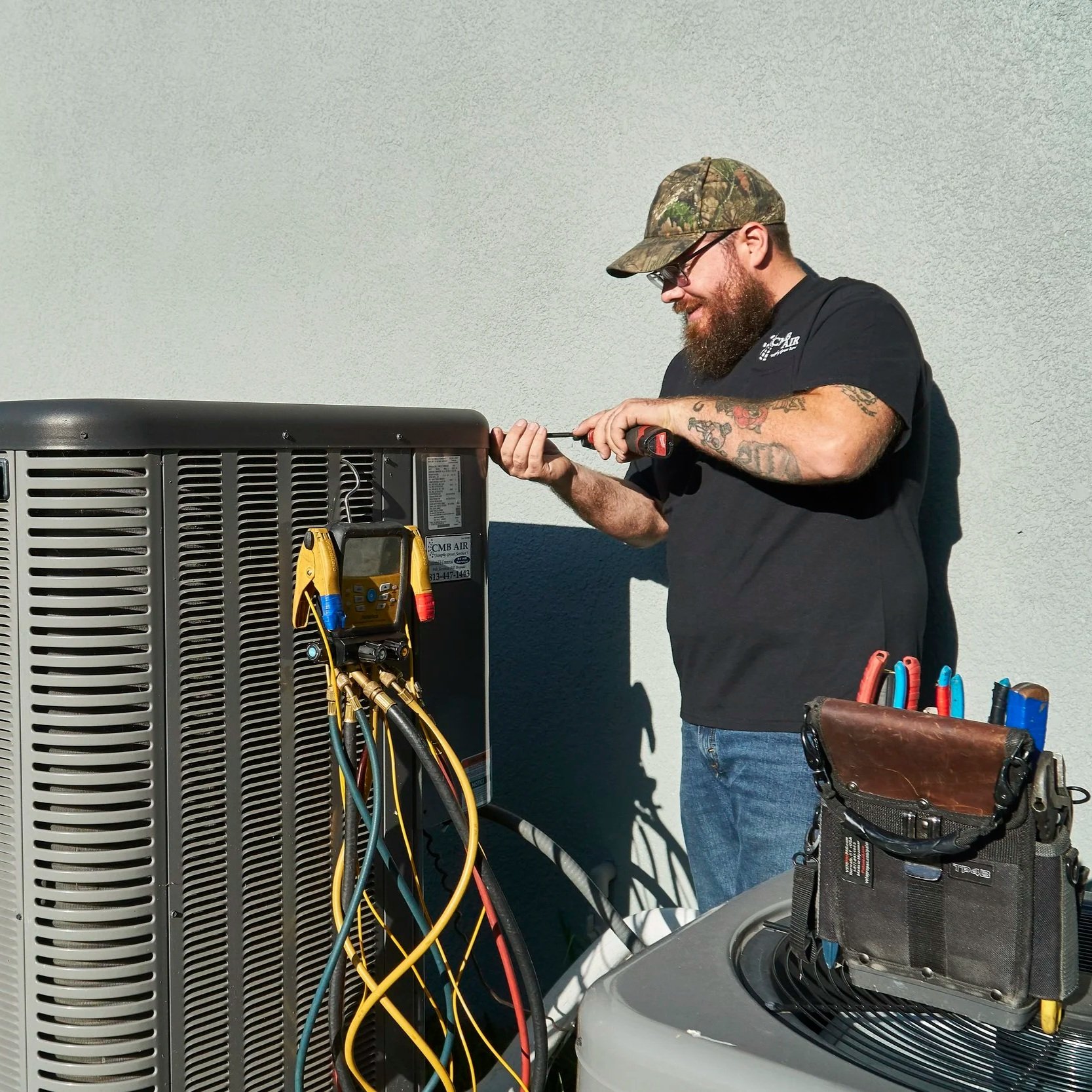
An HVAC technician measures cooling needs to ensure the AC system is correctly sized for a Tampa home’s hot, humid climate.
Why Proper AC Sizing Matters More In Tampa Than Most Places
Sizing an air conditioning system correctly matters everywhere, but in Tampa, Florida, it becomes critical. Heat alone does not tell the whole story. Humidity defines how hard an AC system works, how long it runs, and how comfortable a home actually feels. An undersized system runs constantly and still falls behind during peak heat, while an oversized system cools the air quickly but leaves moisture behind. Both scenarios show up regularly in Tampa homes, often within the first season after installation.
Many homeowners assume bigger equals better when it comes to AC capacity. That assumption leads to systems that short-cycle, meaning they turn on and off rapidly without completing full cooling and moisture-removal cycles. Tampa’s air rarely offers a break from humidity, so systems need runtime more than raw power. A correctly sized system balances output and duration, allowing coils to stay cold long enough to pull moisture from the air while maintaining steady indoor temperatures. Comfort depends on that balance more than thermostat settings or brand names.
Long-term consequences of improper sizing surface quietly. Oversized systems wear out faster due to frequent starts, while undersized systems experience constant strain. Energy bills climb, indoor air quality suffers, and comfort complaints become routine. Tampa’s climate magnifies these outcomes because AC systems operate for most of the year. Correct sizing lays the foundation for reliability, efficiency, and livable comfort rather than temporary relief.
Understanding Cooling Load And Why Square Footage Alone Fails
Cooling load refers to the total amount of heat and moisture an AC system must remove from a home to maintain comfortable conditions. Square footage offers a rough starting point, but it quickly breaks down in Tampa homes, where construction styles, sun exposure, and usage patterns vary widely. Two homes with identical square footage can require very different system capacities based on insulation quality, ceiling height, window placement, and occupancy habits.
Solar gain plays a major role in Tampa. Homes with large west-facing windows absorb intense afternoon heat that lingers well into the evening. Older homes with minimal insulation allow outdoor heat to seep indoors continuously. High ceilings increase air volume, raising cooling demand even if floor space remains modest. Appliances, lighting, and occupants also contribute internal heat, adding to the overall load. Ignoring these factors leads to systems that feel mismatched from the start.
Professional load calculations account for these variables rather than relying on rules of thumb. Accurate sizing evaluates how heat enters and accumulates within a specific structure under real conditions. Tampa homeowners benefit when systems match actual load rather than theoretical averages. Proper load assessment prevents both chronic discomfort and premature system failure tied to misaligned capacity.
The Role Of Humidity In AC Sizing Decisions
Humidity changes how cooling feels and how AC systems perform, especially in Tampa’s subtropical climate. Removing moisture requires time and coil contact, not just cold air delivery. Systems sized only for temperature reduction often struggle to manage humidity effectively. Oversized units cool air quickly and shut down before removing sufficient moisture, leaving homes cool but clammy.
Correct sizing prioritizes latent heat removal alongside sensible cooling. Latent load represents the moisture content in the air, which remains high in Tampa even when temperatures dip slightly. Systems that run longer cycles at moderate output remove more moisture than systems that blast cold air briefly. That difference explains why some homes feel comfortable at higher temperatures, while others feel sticky even at lower temperatures.
Ignoring humidity during sizing leads to ongoing issues that surface months or years later. Mold growth, musty odors, and indoor air quality complaints often stem from systems that are never properly managed for moisture. Tampa homeowners who understand humidity as part of the sizing equation make decisions that protect both comfort and home health over time.
How Insulation And Air Sealing Affect System Size
Insulation and air sealing shape cooling demand as much as square footage or climate. Tampa homes built before modern energy codes often lack consistent insulation coverage, especially in attics and wall cavities. Gaps allow hot, humid air to continuously infiltrate, increasing the cooling load beyond what the structure’s size suggests. AC systems sized without accounting for these losses struggle to maintain comfort regardless of capacity.
Air leaks around doors, windows, and penetrations compound the problem by introducing unconditioned air directly into living spaces. That infiltration forces AC systems to repeatedly cool and dehumidify the air rather than maintain stable conditions. Homeowners sometimes compensate by installing larger systems, which temporarily mask symptoms without addressing the root causes. Over time, oversized systems create new issues tied to short cycling and poor moisture control.
Correct sizing considers insulation quality and air tightness as variables rather than assumptions. In some cases, improving insulation and sealing allows for smaller, more efficient systems that perform better overall. Tampa homeowners benefit when sizing decisions reflect the home’s actual thermal performance rather than worst-case guesses driven by discomfort history.
How Ductwork Design And Condition Influence AC Size
Ductwork plays a quiet but decisive role in how large an AC system needs to be in Tampa homes. Even a perfectly calculated cooling load falls apart when ducts cannot deliver air efficiently. Undersized ducts restrict airflow, forcing systems to work harder to push air through tight passages. Leaky ducts dump conditioned air into hot attic spaces while pulling humid air back into the system. Both conditions increase the effective load, leading homeowners or installers to compensate by choosing larger equipment than the home actually requires.
Many Tampa homes feature duct systems that evolved over decades rather than being designed as a cohesive whole. Additions, room conversions, and equipment swaps often leave ducts mismatched to current layouts. Long runs, sharp turns, and poorly supported flex duct create pressure losses that reduce airflow at the register. When airflow drops, rooms feel warm and humid, even if the system has ample capacity on paper. The response often involves upsizing equipment rather than correcting delivery problems.
Long-term consequences arise when oversized systems mask duct deficiencies rather than fix them. Short cycling increases, humidity control worsens, and wear accelerates across major components. Correct sizing must consider the duct condition honestly. In many Tampa homes, addressing duct issues allows for smaller systems that perform better and last longer than oversized replacements forced to compensate for airflow failures.
Why Window Placement And Orientation Matter
Window placement influences cooling demand far more than many homeowners expect, particularly in Tampa’s intense sun. Large expanses of glass facing west or south absorb significant heat during the afternoon, when outdoor temperatures are already at their peak. That heat enters living spaces directly and lingers long after sunset, increasing the cooling load well beyond what square footage alone would predict.
Older windows compound the issue. Single-pane glass and aging seals allow heat transfer and air leakage, continuously straining AC systems. Homes with shaded windows or modern glazing experience noticeably different cooling behavior even when layouts appear similar. Correct sizing accounts for both window area and orientation rather than treating windows as neutral features.
Ignoring window effects often leads to systems that perform well in the morning but struggle later in the day. Homeowners lower their thermostats to compensate, increasing runtime without resolving the underlying heat gain. Over time, systems sized without window considerations show premature wear and persistent comfort complaints during peak hours. Tampa homes benefit when sizing reflects how sunlight interacts with the structure throughout the day.
Ceiling Height And Air Volume Considerations
Ceiling height affects how much air an AC system must condition, yet it is often overlooked during sizing. Tampa homes with vaulted ceilings or open floor plans contain significantly more air volume than standard designs. Cooling that extra air requires additional capacity, even if floor space remains unchanged. Warm air also rises, complicating temperature balance and increasing runtime during hot periods.
High ceilings also affect airflow patterns. Conditioned air may stratify, leaving lower living areas warmer while cool air collects overhead. Systems sized only by square footage may struggle to overcome these dynamics, leading to uneven comfort and extended operation. Homeowners often describe these homes as never quite cooling down, especially during sustained heat.
Accurate sizing accounts for air volume rather than floor area alone. In some cases, airflow adjustments or zoning strategies improve performance without increasing system size dramatically. Tampa homeowners with high ceilings benefit when sizing decisions reflect how air moves within the space rather than relying on generic formulas.
Occupancy Patterns And Internal Heat Load
People, appliances, and daily activities contribute meaningful heat inside Tampa homes. Kitchens generate heat during cooking. Home offices add a constant load from electronics. Larger households produce more internal heat simply through occupancy. These factors raise cooling demand beyond what structural features alone suggest, especially during continuous use.
Sizing that ignores internal heat load often underestimates real demand. Systems run longer, humidity control suffers, and comfort varies as activity levels change. Tampa homes used heavily during the day experience different cooling behavior than homes occupied primarily at night. Correct sizing reflects how the home actually functions rather than assuming minimal internal load.
Over time, internal heat patterns shift. Remote work becomes permanent. Appliance use increases. Family size changes. Systems sized with flexibility rather than bare minimum capacity handle these shifts more gracefully. Tampa homeowners benefit when sizing anticipates realistic usage rather than idealized scenarios.
Why Oversizing Causes More Problems Than It Solves
Oversized AC systems remain one of the most common issues seen in Tampa homes. Homeowners often request larger systems, hoping to eliminate hot spots or speed up cooling. In practice, oversized equipment creates new problems that outweigh perceived benefits. Short cycling reduces humidity removal and increases wear on compressors and electrical components.
Rapid cooling also leads to uneven temperatures because air fails to fully circulate before the system shuts down. Rooms feel cool initially but warm quickly between cycles. Tampa’s humidity worsens the effect by leaving moisture behind. Comfort declines even as energy use increases, which frustrates homeowners who expected improvement.
Long-term reliability suffers as well. Frequent starts stress motors and controls, shortening system lifespan. Repair frequency increases, and comfort remains inconsistent. Correct sizing avoids these pitfalls by matching capacity to actual load rather than perceived need for excess power.
Why Undersizing Creates Constant Strain
Undersized systems create a different set of problems that appear gradually but persistently. In Tampa, undersized AC systems run nearly nonstop during peak season and still fail to maintain comfort. Indoor temperatures creep upward throughout the day, and humidity remains noticeable despite continuous operation.
Constant runtime strains compressors, fans, and electrical components. Systems generate heat internally while attempting to remove heat from the home, accelerating wear. Energy bills climb steadily as runtime increases without delivering comfort gains. Homeowners often feel the system works hard but never catches up.
Undersizing also limits system recovery. After a power outage or temperature setback, the system struggles to regain comfortable conditions. Tampa’s climate leaves little margin for recovery, so undersized systems feel perpetually behind. Correct sizing avoids both extremes by balancing capacity with runtime needs.
The Importance Of Professional Load Calculations
Professional load calculations form the backbone of correct AC sizing for Tampa homes. These calculations evaluate structural features, insulation levels, window placement, occupancy, and climate data to determine true cooling demand. Unlike rules of thumb, they reflect how a specific home behaves under real conditions.
Accurate calculations prevent guesswork driven by discomfort, history, or past equipment size. Many Tampa homes carry systems that were oversized years ago to compensate for duct or insulation issues that no longer exist. Repeating that mistake locks inefficiency into the next generation of equipment. Professional analysis allows adjustments based on current conditions rather than inherited assumptions.
Over time, properly sized systems deliver steadier comfort, better humidity control, and lower operating costs. Tampa homeowners who invest in correct sizing avoid the cycle of replacement driven by dissatisfaction rather than necessity.
FAQs
Signs include short cycling, poor humidity control, uneven temperatures, and energy bills that rise faster than usage changes. A professional load calculation provides clarity.
Improvements that reduce heat gain often allow for smaller systems. Updating these features before replacement helps avoid oversizing.
In some cases, airflow adjustments or duct improvements improve performance. True resizing usually involves replacing equipment to match the revised load.
Sizing should handle peak conditions without excessive oversizing. Proper calculations balance peak demand with efficient operation during typical days.
Sizing should be reevaluated whenever major changes occur, such as renovations, additions, window upgrades, or significant shifts in household usage.
