
Explaining the Differences Between Duct Fogging and Traditional Air Duct Cleaning
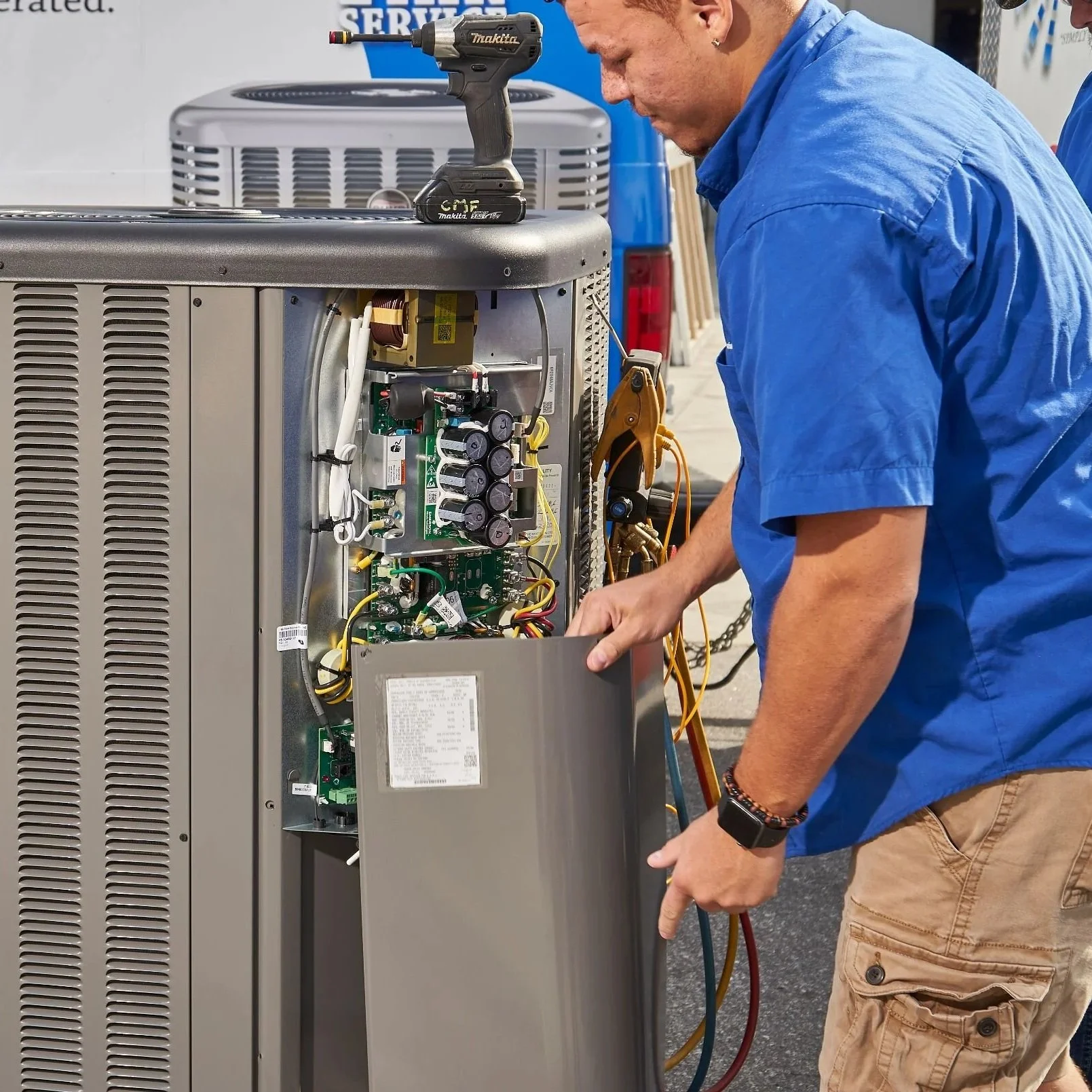
A technician performs traditional air duct cleaning, physically extracting built-up debris to restore airflow and improve system efficiency.
How Traditional Air Duct Cleaning Works Inside HVAC Systems
Traditional air duct cleaning focuses on physically removing debris that accumulates in ductwork over time. Dust, insulation fibers, construction residue, pet hair, and other particulate matter settle along duct walls as air circulates through the system. In homes and businesses across Tampa, Florida, high system run times combined with attic-based duct installations accelerate this buildup, especially when ducts contain leaks or poorly sealed joints. Cleaning addresses what can be seen and physically extracted, targeting material that restricts airflow or becomes airborne during system operation.
The process relies on mechanical agitation and negative pressure. Technicians use rotating brushes, compressed air tools, or manual contact devices to dislodge debris while powerful vacuums pull the loosened material out of the system. Registers, trunk lines, and return pathways receive direct attention, with debris captured externally rather than redistributed. Traditional cleaning works best when ducts contain visible buildup or when airflow issues trace back to obstructions. Over time, failure to remove physical debris can strain blowers, reduce efficiency, and circulate irritants throughout the space, particularly in properties with older duct systems or a history of renovations.
What Duct Fogging Is Designed to Address Instead
Duct fogging approaches duct contamination from a different angle by targeting what remains after physical debris has settled or been removed. Rather than extracting material, fogging applies a fine mist treatment intended to coat interior duct surfaces. The goal is to neutralize microbial growth, odor-causing residues, and organic compounds embedded in duct walls. In Tampa’s humid climate, condensation inside ductwork creates conditions where surface level contamination develops even when ducts appear visually clean.
Fogging agents disperse as microscopic particles that travel with airflow and settle along seams, bends, and interior surfaces that mechanical tools cannot fully reach. The service exists because duct systems act as enclosed environments where moisture and organic matter persist long after visible debris has been addressed. Duct fogging does not attempt to improve airflow or remove blockages. Its role centers on addressing contamination that influences air quality rather than system mechanics. Confusing fogging with cleaning often leads to misplaced expectations about what the service can realistically accomplish over time.
Differences in Equipment, Tools, and Technical Approach
The tools used for traditional duct cleaning and duct fogging differ significantly, reflecting their distinct objectives. Cleaning equipment emphasizes contact and extraction. High-powered vacuums, flexible hoses, agitation devices, and access tools dominate the process. Technicians physically interact with duct interiors, opening access panels and removing registers to reach accumulation zones. In Tampa homes with long attic runs, equipment selection accounts for duct length, insulation type, and structural access limitations.
Duct fogging relies on atomization equipment rather than mechanical contact. Fogging machines generate controlled particle sizes that remain airborne long enough to distribute evenly throughout the duct system. The application requires an understanding of airflow dynamics rather than brute force removal. Improper fogging can oversaturate insulation or leave untreated pockets if airflow patterns are ignored. The technical difference lies in how each service interacts with the system: one removes matter directly, while the other modifies the internal environment through surface treatment.
Situations Where Traditional Duct Cleaning Provides Clear Value
Traditional air duct cleaning becomes necessary when physical debris reaches levels that interfere with system operation or occupant comfort. Homes that have recently undergone construction or remodeling often experience drywall dust and material residue inside ducts. Tampa properties with aging duct systems may contain deteriorating insulation or pest debris that circulates during system cycling. In these scenarios, fogging alone offers little benefit because underlying debris remains in place.
Cleaning also supports airflow restoration in systems where buildup restricts movement. Reduced airflow forces blowers to work harder, increasing wear and energy consumption. Over time, neglecting debris removal can contribute to uneven cooling and higher utility costs. Traditional cleaning addresses these mechanical consequences directly by clearing pathways rather than masking symptoms. Recognizing when debris removal matters helps property owners choose the appropriate service rather than defaulting to treatments that fail to resolve the core issue.
Situations Where Duct Fogging Addresses Problems Cleaning Cannot
Duct fogging becomes relevant when air quality complaints persist despite clean ducts. Odors that return quickly, musty smells without visible debris, or confirmed microbial findings point toward surface level contamination rather than particulate buildup. In Tampa’s environment, even well-sealed ducts are exposed to moisture that supports microbial growth along interior surfaces. Cleaning removes loose material but does not neutralize contamination bonded to duct walls.
Fogging also plays a role after events that introduce organic residue rather than debris. Water intrusion, condensate failures, or pest activity often leave behind bacteria and odor-causing compounds that mechanical tools cannot fully eliminate. In commercial spaces, tenant turnover or smoke exposure may embed odors within duct surfaces. Fogging addresses these conditions by treating the surfaces themselves rather than relying on extraction. Understanding this distinction prevents overcleaning while overlooking surface contamination that continues affecting indoor air quality.
Impact on Indoor Air Quality Over Time
The long-term impact of traditional duct cleaning and duct fogging on indoor air quality differs in meaningful ways. Cleaning reduces airborne particulate levels by removing material that would otherwise circulate. Results often feel immediate in systems burdened by debris, particularly for occupants sensitive to dust. Over time, however, new particulates continue to enter the system through daily operations, requiring periodic reassessment rather than permanent resolution.
Duct fogging influences air quality by altering the condition of duct surfaces rather than reducing particle volume. Odor reduction and microbial suppression may persist longer when moisture levels remain controlled. In Tampa properties where humidity fluctuates seasonally, results depend on how well the HVAC system manages condensation after treatment. Neither service permanently eliminates indoor air contaminants. Each addresses different contributors, which explains why combining approaches can sometimes produce better outcomes than relying on a single method.
Misconceptions That Lead to Improper Service Selection
One common misconception involves viewing duct fogging as a substitute for traditional cleaning. Fogging does not remove dust, insulation fibers, or debris lodged inside ducts. Applying fog over dirty ducts may coat existing material without resolving airflow or particulate concerns. Another misunderstanding frames duct cleaning as an air quality cure rather than a mechanical maintenance step. Cleaning alone does not address microbial growth bonded to duct surfaces in humid environments.
Marketing language often blurs these distinctions, leading property owners to expect results that exceed the scope of the selected service. Tampa homeowners may schedule fogging to improve airflow or book cleaning to eliminate odors. Clarifying what each service targets helps align expectations with outcomes and prevents frustration caused by unresolved issues stemming from selecting the wrong intervention.
How System Condition Influences Service Effectiveness
The condition of the HVAC system influences how effective either service becomes. Duct leakage, poor filtration, and inadequate humidity control undermine results regardless of method. In systems with frequent condensation, fogging benefits dissipate faster. In systems with leaky returns, debris reenters ducts shortly after cleaning. Tampa’s climate magnifies these challenges by introducing moisture and outdoor particulates year-round.
Evaluating system health alongside service selection supports better outcomes. Addressing airflow balance, sealing issues, and drainage performance extends the benefits of both cleaning and fogging. Neither service corrects mechanical deficiencies on its own. Recognizing their dependency on overall system performance helps property owners make informed decisions rather than viewing either approach as a standalone fix.
How Each Service Fits Into Long-Term HVAC Maintenance Planning
Traditional air duct cleaning and duct fogging occupy different positions within long-term HVAC maintenance planning, particularly in Tampa, Florida, where systems operate under persistent heat and humidity. Duct cleaning functions as a corrective maintenance task that addresses accumulated physical material. It typically enters the schedule after identifiable events such as remodeling, pest activity, or years of deferred maintenance. Cleaning restores duct conditions closer to their original state but does not alter how the system behaves moving forward. Debris accumulation resumes gradually as air continues circulating through the home or business.
Duct fogging fits into maintenance planning as a situational response rather than a recurring task. Property owners often apply it after specific contamination events, confirmed microbial findings, or odor issues that cleaning alone does not resolve. Over time, owners who understand why fogging was needed tend to focus more on preventing recurrence through humidity control, filtration upgrades, and drainage monitoring. Both services influence how owners think about system stewardship, but neither replaces routine inspections or component maintenance that keep HVAC systems operating reliably in Tampa’s demanding climate.
Differences in Risk Profiles and Potential Downsides
Each service carries its own risk considerations when applied improperly or without proper assessment. Traditional duct cleaning involves physical interaction with duct materials, which can pose risks in older systems or fragile ductwork. Aggressive brushing or improper vacuum attachment may damage the flex duct, dislodge insulation, or create leaks that worsen airflow issues. In Tampa homes with aging duct systems exposed to attic heat, material brittleness increases over time, making careful technique essential.
Duct fogging presents a different risk profile regarding chemical exposure and moisture interactions. Improper product selection or excessive application may leave residue or introduce moisture into insulation layers. Occupant sensitivity varies, particularly for individuals with respiratory conditions. Clear communication, appropriate product choice, and proper ventilation reduce these risks significantly. Understanding these tradeoffs helps property owners weigh service decisions based on system condition rather than assuming either approach carries no downside.
Residential Versus Commercial Decision Factors
Homes and commercial buildings often approach duct cleaning and fogging decisions differently due to scale and usage patterns. Residential systems typically prioritize occupant comfort and health, including concerns such as allergies and odors. Homeowners may schedule cleaning reactively when symptoms arise or after specific events, such as water intrusion. Tampa homeowners often weigh cost against perceived benefit, making clarity around service purpose especially important.
Commercial properties factor operational continuity and tenant experience into decisions. Office buildings, retail spaces, and medical facilities may schedule cleaning during off-hours to avoid disruption. Fogging may occur between tenants or after renovations to reset indoor conditions. Larger systems introduce complexity in both services, requiring phased execution and careful planning. These contextual differences explain why service recommendations vary even when addressing similar underlying issues.
Cost Structure and Value Considerations
Cost structures differ between duct cleaning and duct fogging due to labor intensity and equipment requirements. Traditional cleaning often scales with system size and access complexity. Larger duct networks, multiple air handlers, and limited access points increase labor time. In Tampa, properties with sprawling attic layouts or multi-story construction, setup time significantly influences cost.
Duct fogging costs relate more closely to system volume and product selection. While labor time may be shorter, proper preparation and monitoring remain critical. Value perception improves when services align clearly with the problem being addressed. Owners who choose cleaning to resolve airflow restriction or fogging to address persistent odors typically view the investment as justified. Confusion about the service purpose often leads to dissatisfaction rather than cost alone.
How Climate Influences Service Selection in Tampa, Florida
Tampa’s climate shapes how duct contamination develops and which service becomes appropriate. High humidity supports microbial growth on duct surfaces even in systems without heavy debris accumulation. Seasonal storms introduce moisture intrusion risks, underscoring the importance of fogging after remediation. At the same time, year-round system operation increases particulate circulation, making periodic cleaning necessary in properties with poor filtration or leaky ductwork.
Climate also affects how long results last. Cleaning outcomes remain stable until debris reaccumulates, while fogging results depend heavily on post-treatment moisture control. Understanding these climate-driven dynamics helps property owners choose services based on environmental reality rather than generic recommendations that ignore regional conditions.
Choosing the Right Service Based on Diagnosed Conditions
Selecting between duct fogging and traditional air duct cleaning works best when based on diagnosed conditions rather than symptoms alone. Visible debris, airflow restriction, and dust circulation indicate cleaning is needed. Persistent odors, microbial findings, or contamination after moisture events suggest fogging may add value. In some cases, both services address different layers of the same problem when sequenced appropriately.
Professional assessment plays a key role in guiding these decisions. Evaluating duct condition, system performance, and environmental factors allows recommendations grounded in function rather than sales positioning. Tampa property owners benefit most when services match the underlying issue rather than applying treatments that treat symptoms without addressing the cause.
FAQs
Traditional air duct cleaning removes physical debris from ductwork, while duct fogging treats interior duct surfaces to address microbial growth and odors without removing material.
Duct fogging can be performed without cleaning when ducts are free of heavy debris. Fogging does not remove dust or blockages, so cleaning may still be necessary in some systems.
Traditional cleaning removes loose material but does not neutralize microbial growth bonded to duct surfaces. Additional treatment may be required when microbial contamination is present.
Traditional duct cleaning improves airflow by removing obstructions and buildup. Duct fogging does not affect airflow or system mechanics.
High humidity increases the risk of microbial growth, making fogging more relevant after moisture events, while constant system operation increases the need for periodic duct cleaning to address particulate circulation.
