
Storm Power Surges and Your AC: What Fails First
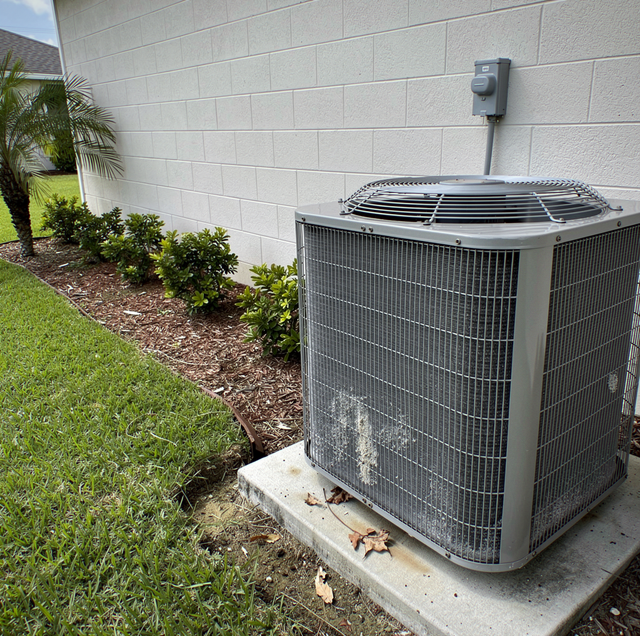
The Moment Lightning Strikes Near Your Home
The sky flashes, thunder rattles the windows, and the outdoor unit that was humming along a second ago goes quiet mid-cycle. Sometimes it comes back on its own once the storm passes. Sometimes it doesn't, and the breaker trips the moment someone tries to reset it. That gap between "the power flickered" and "the unit won't start" is where a lot of confusion happens, because most people assume any storm-related AC problem is the same problem. It isn't. A voltage spike traveling in through the electrical line does something very different to a compressor than a simple loss of power does, and knowing which one happened changes what you check first.
How a Surge Differs From a Power Outage
An outage is simple: the grid stops delivering electricity, every circuit in the house goes dark, and nothing runs until service is restored. Nothing about an outage by itself damages equipment. The compressor motor just sits idle.
A surge is the opposite kind of event. Instead of taking voltage away, it forces excess voltage in, usually for a fraction of a second, along the same wire that normally carries a steady 208 to 240 volts to the outdoor unit. That spike can come from a nearby lightning strike, from a direct hit to a power line, or from the utility grid itself re-energizing after an outage, which often sends its own smaller jolt through the system as power snaps back on. The equipment on the receiving end was built to handle a fairly narrow, predictable voltage range. A spike that jumps well past that range, even briefly, can push more energy through internal wiring and components than they're rated to absorb.
Why the Compressor and Control Board Take the Hit First
Not every part of an AC system is equally exposed. The parts most likely to fail during a surge are those with the least tolerance for excess voltage, and they are the components a technician checks first after a storm.
Compressor windings: The compressor's motor is wrapped in coils of insulated copper wire. That insulation is thin by design, since thicker insulation would hurt motor efficiency. A voltage spike can punch through that insulation in an instant, creating a short between windings that weren't meant to be electrically connected. Once that happens, the motor can hum, trip the breaker, or refuse to start at all, and there's no way to re-insulate wire that's already burned inside a sealed compressor shell.
Start and run capacitor: The capacitor stores and releases electrical charge to help the compressor motor start and keep running smoothly. It's a small component that holds a precise charge, making it sensitive to sudden spikes far above its rating. A surge can bulge, crack, or fully blow a capacitor in one event.
Control board: The circuit board that manages the outdoor unit's electronics runs on low-voltage signals. A spike traveling in from the main power connection can fry traces and relays on that board almost instantly, since its components are built for milliamps, not a jolt of excess voltage.
Compare that to the refrigerant lines or the indoor air handler. The lines are just sealed copper tubing carrying refrigerant; they have no electronic components that could be damaged by a voltage spike. The air handler, meanwhile, is less often the first casualty simply because the outdoor unit sits closest to where the spike enters, but the low-voltage control wiring running between the two is its own path, which is why an indoor board sometimes fails alongside the outdoor one. The outdoor unit takes the brunt of it because it's the component most directly wired to the line where the spike enters.
Warning Signs That Point to Surge Damage
After a storm, a handful of symptoms line up specifically with surge damage rather than routine wear:
| Symptom | Likely Cause |
|---|---|
| Unit won't start at all; flip the thermostat up, and the outdoor unit does nothing, not even a hum | A shorted compressor winding or a control board that's no longer sending the signal to start |
| Breaker trips repeatedly; resetting it only buys a few seconds before it trips again | Current finding a short path somewhere in the compressor or wiring rather than flowing where it should |
| Burning smell near the outdoor unit; a scorched, slightly acrid odor from the cabinet | Insulation on the windings or a board component overheated and burned during the spike |
| Unusual clicking or humming; the compressor hums loudly without spinning, or clicks repeatedly trying to start | A damaged capacitor or contactor that can no longer deliver the jolt the motor needs to get moving |
Any one of these, after a storm, is worth treating as a signal to shut the system off at the breaker and have it looked at, rather than repeatedly resetting it and hoping it clears on its own.
Symptoms That Are Probably Not Surge Related
Not every post-storm complaint traces back to a spike. A few common ones have nothing to do with electrical damage:
- Weak or reduced airflow, which is far more often a clogged filter or blocked return than surge damage.
- Ice forming on the refrigerant lines, which points toward a refrigerant or airflow issue rather than an electrical one.
- A hissing sound near the lines, which typically signals a refrigerant leak, not a voltage event.
- A blank thermostat screen, usually dead batteries, though a spike can occasionally reach the control circuit too.
If the outdoor unit is running normally and the complaint is about comfort or airflow rather than the unit refusing to start, a surge is unlikely to be the cause.
Compressor Repair Or Replacement After a Surge
Once surge damage is suspected, the compressor is usually the first component evaluated, since it's both the most expensive part of the system and the most exposed to the spike. A technician typically checks the capacitor and contactor first, because those are replaceable parts that sit ahead of the compressor in the circuit and sometimes take the full hit before the motor windings do. If those check out damaged but the compressor windings test fine, replacing the capacitor and contactor can bring the unit back without touching the compressor itself.
If the surge reached the windings directly, though, the compressor is sealed shut, and its internal wiring can't be repaired the way a capacitor can be swapped. A shorted winding usually means the compressor itself needs to be replaced. Given how much runtime an AC gets through a long cooling season, with the system cycling for hours almost every day, a damaged compressor tends to get noticed within hours rather than weeks, since the indoor space heats back up fast once cooling stops.
Reducing the Risk Before the Next Storm
Storm season brings more than wind and rain. Outages are common, and so are the voltage spikes that follow lightning strikes or grid restoration.
Surge-protective devices, installed either at the main electrical panel or as a dedicated unit ahead of the outdoor disconnect, are a recognized category of protection that some homeowners choose to add through a licensed electrician. Beyond that, shutting the AC off at the breaker during an active lightning storm, rather than leaving it running and hoping for the best, takes the unit out of the path of most of what comes down the line while the risk is highest, though it isn't the same protection a surge-protective device gives. After the storm passes and power is stable again, checking the warning signs above before restarting the system is a simple habit that can catch a partially damaged capacitor before it leads to a full compressor failure.
Frequently Asked Questions
Yes. A strike doesn't have to hit the house. One landing within about a mile can induce a surge onto nearby wiring, and a strike anywhere on the utility line feeding the neighborhood can send a spike straight down the service drop.
It can be immediate or take days. A partially damaged capacitor may keep the compressor limping along for a while before the reduced charge can finally keep the motor started, especially once the unit is cycling for hours at a stretch in the heat.
It's possible, though less common than compressor damage. The thermostat runs on a separate low-voltage control circuit, and a strong enough spike can occasionally travel that path and cause an erratic or blank display, independent of anything happening at the outdoor unit.
It isn't guesswork. A technician can check a capacitor with a capacitance meter against the microfarad rating stamped on its can, and a reading more than about 6% below that rating signals a failing capacitor even if it isn't visibly bulged. A winding-resistance or megohm check on the compressor can catch an insulation breakdown before it shows up as a refusal to start. Those readings, not a hunch, are what determine whether it's safe to restart the system.
Not on its own. The transfer switch that shifts a home from grid power to generator power can itself introduce a brief voltage irregularity during the switch, so a generator addresses an outage but isn't a substitute for surge protection.
Motor magnet-wire insulation on residential compressors is typically rated to withstand only a couple thousand volts. A spike carrying several times that, lasting only a few thousandths of a second, punches through that insulation almost instantly, which is why even a very brief spike can cause damage that a longer outage never would.
Storm season tests HVAC equipment in more ways than one, and a unit that goes silent after a lightning flash deserves a look before it gets switched back on and run through another cycle. Catching a damaged capacitor or a struggling compressor early, rather than after repeated restarts, is usually the difference between a simple repair and a full replacement.
Schedule a post-storm AC inspection — get the outdoor unit's compressor, capacitor, and control board checked for surge damage before you run it again. CMB Air serves Tampa and the Tampa Bay area. Call (813) 447-1443.
