
Black Mold in Your AC Vents: How It Gets There and How to Stop It
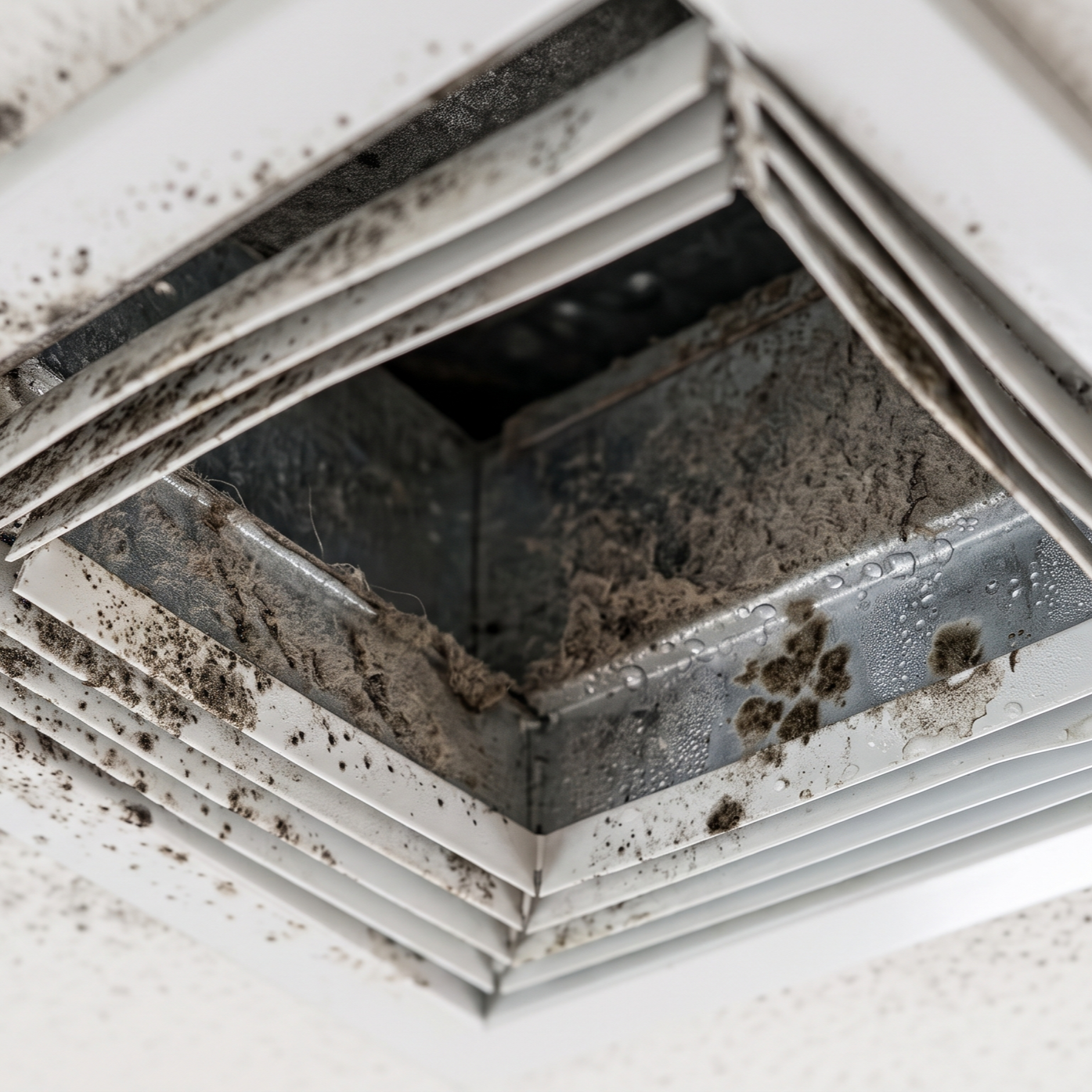
Quick Answer: Black spots around AC vents come from mold, and mold needs three things at once: moisture, warmth, and dust to eat. An air conditioner hands it all three. The cold evaporator coil and drain pan stay wet, the ducts stay warm and dark, and dust that slips past the filter is the food. The growth you see at a register is usually downstream of a wet coil, a clogged condensate drain, or damp ductwork. Wiping the vent cleans the surface but not the source, so it comes back. The real fix is removing the moisture: clear the condensate drain, have the coil and pan cleaned, control indoor humidity, seal leaky ducts, and change the filter on schedule.
You notice it while you are standing under a vent. A ring of dark speckles around the register, or a musty note that rolls out the moment the air kicks on. The instinct is to grab a rag and some cleaner, wipe the grille, and move on. That handles what you can see. It rarely handles what feeds it because the spots at the vent are usually the last stop, not the source.
"Black mold" is a phrase built to alarm, and it does its job. But the useful question is not which exact species you are looking at. It is simpler: mold at a vent means moisture is sitting somewhere in your cooling system, and something is feeding on it. Find that wet spot, dry it out, and the growth loses what it needs. Leave it, and no amount of surface scrubbing keeps up.
Why an AC Is a Perfect Home for Mold
Mold is not picky, but it does have a short list of requirements: moisture, warmth, and something organic to eat. Give it all three in one place, and it settles in. An air conditioner supplies the full set, which is why this shows up in cooling systems far more than most homeowners expect.
Think of it the way you think of a sponge left in a dark sink. The sponge stays damp, the cabinet under the sink is warm and closed off, and there is enough food ground into the fibers to keep something alive. A cooling system builds that same combination on purpose, then runs air across it and out into your rooms.
The moisture comes from the job the system is doing. Removing humidity from your indoor air is half of what cooling means, so water condenses on the cold surfaces every time the unit runs. The warmth is the air itself, comfortable for you and comfortable for mold. And the food is dust: skin cells, fabric fibers, pollen, and grime that slip past the filter and settle on wet metal. Put a film of dust on a surface that never fully dries, and you have built a garden.
Where the Growth Actually Starts
The spots at your register get the attention, but they are almost never the origin. Trace the air backward, and you find the wet parts.
The evaporator coil is the cold, finned block inside your indoor air handler. Warm household air passes over it, and moisture condenses on the fins, just as it beads on a glass of iced tea. That coil is dark, stays wet through most of a cooling cycle, and catches the dust that gets past the filter. It is the single most likely place for growth to begin.
Directly below the coil sits the drain pan, which is designed to catch that condensation and send it out through the condensate drain line, usually a length of PVC. When the pan drains cleanly, water never lingers. When it does not, you get standing water, and standing water is a nursery.
From there, the problem can travel. Ductwork holds warm, still air, and if a run ever picked up moisture, or if spores rode downstream from the coil, a colony can take hold inside the ducts themselves. That is when odor and dark specks show up at several vents at once rather than at one. Registers and grilles are at the far end of the line. Growth there is often the visible tail of something living farther upstream.
What Lets It Get Started
Mold does not appear because a system is old or cheap. It appears because something is keeping surfaces wet longer than they should be. A handful of conditions do that:
- High indoor humidity keeps every surface damp enough to grow. In a muggy house, the coil and pan barely get a chance to dry between cycles.
- A dirty or clogged coil and drain trap moisture and give dust a place to pile up, feeding the film.
- An oversized or short-cycling system cools the air fast, then shuts off before it has pulled much water out. The rooms feel cool but stay clammy, and the damp never leaves.
- Dirty filters stop catching dust, so more of it reaches the wet coil, which is the same as feeding the mold directly.
- Leaky ducts pull humid air from an attic or crawlspace into the system, adding moisture where it does not belong.
- Low airflow from a choked filter or blocked return lets the coil run colder and wetter than it should, extending the time it stays damp.
None of these is exotic. Most homes hit one or two of them at some point, which is why this is a common call rather than a rare one.
The Signs You Are Actually Dealing With Mold
A few clues separate mold from ordinary dust or a stray stain:
- Dark speckling around vents and registers that returns after you clean them, often forming a ring along the airflow.
- A musty, earthy smell that appears when the AC runs and fades when it stops, because the blower is the thing pushing air across the wet, growing surfaces.
- Allergy or respiratory symptoms that get worse indoors and ease when you leave the house, since the system is circulating spores through every room.
That last point is why this matters beyond looks. A cooling system does not keep its air to itself. Whatever grows on the coil or in the ducts gets picked up by the blower and delivered to every room the thermostat schedules. The vent is where you notice it, but the whole house is breathing it.
How to Fix It, Source First
Start with what you control. Replace the filter and, in a humid climate, plan on doing it more often than the box suggests. A clean filter catches the dust that feeds the film and keeps airflow strong enough that the coil is not running wetter than it needs to.
Then go after the water. Clearing the condensate drain so the pan empties fully removes the standing water that keeps the whole system damp. Controlling indoor humidity, whether through the system's own dehumidification or a dedicated dehumidifier, takes away the background moisture that lets everything grow. And sealing leaky ducts stops humid outside air from feeding the problem where you cannot see it.
The visible growth still needs attention, so clean the affected vents and registers. Just be clear about what that does. Wiping a grille is a surface fix. It makes the vent look right, and if the register itself was the only damp spot, that can be enough. But if the coil, pan, or ducts are the real source, the register is only where the growth surfaces, and it returns on schedule.
That is where a professional comes in. Cleaning the coil and drain properly means reaching the fins with the right coil cleaner and opening access panels that most homeowners should leave shut, then confirming the drain runs clear. A technician can also inspect the ducts to see whether growth has moved into the runs. In severe cases, where a colony is established in the coil or across long duct sections, the work becomes remediation rather than a routine cleaning.
One safety note runs through all of it. The coil is part of a sealed refrigerant system, and refrigerant work is EPA-regulated and is the responsibility of a licensed pro, not a homeowner with a hose. And treating a mold problem means treating what you breathe, so the goal is to remove the source and dry it out, not to seal spores behind a fresh coat of cleaner on the grille.
Keeping It From Coming Back
Prevention is the same short list, done on a schedule instead of in a panic. Keep the condensate drain clear so water never stands in the pan. Change the filter on a regular cycle so dust does not build up in food. Control indoor humidity so surfaces get a chance to dry. And have the system serviced, coil and drain included, so a small film gets caught before it becomes a colony.
A humid climate makes all of this more likely, and it cuts both ways. Heavy moisture in the air means the coil and pan stay wet longer, and mold gets more openings, but the same season that drives the humidity is the season the system runs hardest and dries itself out between longer cycles. Neither the wettest stretch nor the mildest one is the whole story, which is why steady maintenance beats reacting to whatever the weather is doing this week.
Frequently Asked Questions
The system gives mold everything it needs at once: moisture, warmth, and dust to eat. Mold takes hold once a surface stays above roughly 60 percent relative humidity, and the coil is worse than that because it sits right at the dew point, where water is condensing out of the air, so its surface is effectively wet every cycle. Add the dust that slips past the filter for food, and the coil becomes the ideal place for growth to begin deep in the system, rather than at the grille you can see.
The term is alarming, but the dark growth at a register is often ordinary mold and mildew rather than a dangerous species. The only way to identify the species is a lab air or surface test, and even then, the result rarely changes the fix, since any mold means moisture is feeding it upstream, and the wet spot has to be dried out regardless of the label.
Most of it starts at the evaporator coil and the drain pan, where water sits. A well-set-up system has a float switch or a secondary drain pan under the air handler that shuts the unit off or catches overflow before that water ever pools long enough to feed growth. The black spots at the vents are usually downstream of that coil or duct source, carried there by airflow, which is why wiping only the register does not stop it.
When the drain line backs up, water pools in the pan and around the air handler instead of draining away, and that standing water is a constant moisture source. To flush it, pour about a cup of white vinegar down the cleanout tee near the air handler; vinegar is preferred over bleach, which corrodes the metal pan and coil. For a stubborn clog, a wet/dry vacuum held to the drain's outdoor termination pulls the blockage out. Clearing that line removes the reservoir mold feeds on.
Cleaning the visible growth helps the surface, and if the register is the only damp spot, that may be enough. But if the coil, pan, or ducts are the source, it returns on the system's own schedule. One add-on that helps once the source is fixed is a UV-C lamp mounted at the coil; its light suppresses regrowth on the coil surface it shines on. The moisture source still has to be corrected, and the system cleaned by a pro, not just wiped at the register.
Keep the condensate drain clear, seal leaky ducts, and change the filter at regular intervals: a 1-inch filter every 1 to 2 months, a 4-inch media filter every 6 to 12 months. Keep indoor relative humidity below 50 percent, since mold stalls once surfaces stay under that mark, and have the coil and drain serviced regularly. Removing both the moisture and the food source is what keeps it from returning; taking away one without the other only slows it down.
Book a coil and drain inspection — clear the source of the mold, not just the surface. CMB Air serves Tampa and the Tampa Bay area. Call (813) 447-1443.
