
Oversized vs. Right-Sized AC: Why Bigger Isn't Better
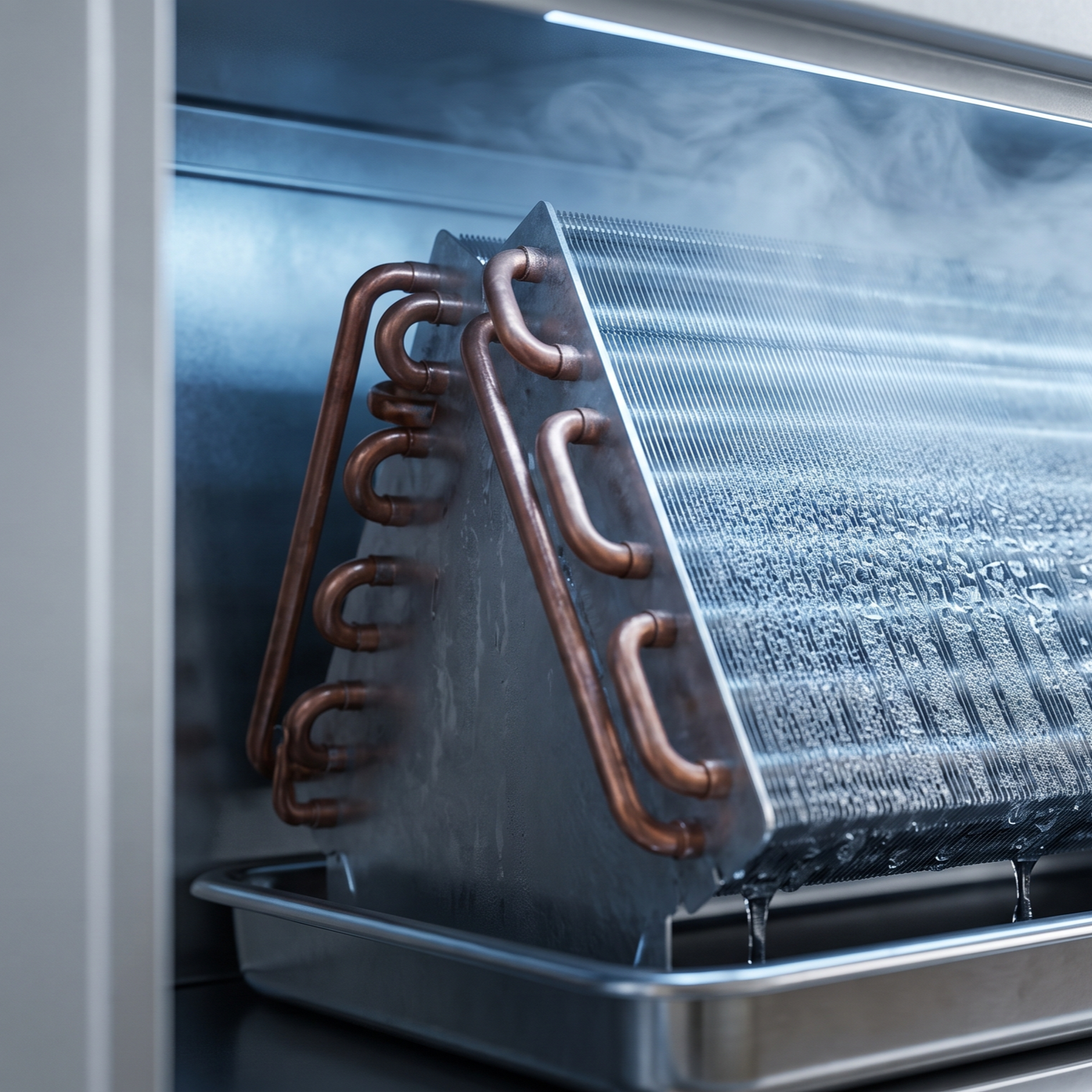
Quick Answer: The reason comes down to what an air conditioner actually does besides lower the temperature, and why a unit that is too powerful skips half the job.
It sounds like common sense: if the house is not comfortable, install a larger air conditioner. More power, more cooling, right? Except a lot of homes with a too-big unit end up cold and clammy at the same time, with humidity they cannot shake, rooms that never feel quite right, and an AC that clicks on and off all day. In a humid climate, an oversized air conditioner is one of the most common comfort mistakes there is.
The reason comes down to what an air conditioner actually does besides lower the temperature, and why a unit that is too powerful skips half the job.
Cooling and Drying Are Two Jobs
An air conditioner does two things at once. It lowers the air temperature, and it pulls moisture out of the air. The drying occurs as warm, humid air passes slowly over the cold evaporator coil: moisture in the air condenses on the coil and drips into a drain, leaving the air both cooler and drier. But that dehumidifying only works if the air spends enough time moving across the coil, which means the system has to run in long, steady cycles. Pull the air across too fast, or stop too soon, and the temperature drops, but the moisture stays.
That is the whole trap. Comfort in a humid climate is not just about temperature; it is about temperature and humidity together. A house at 75 degrees and dry feels great; a house at 75 degrees and damp feels cold, sticky, and clammy. The air conditioner has to run long enough to do the drying, not just the cooling.
Why Oversized Units Short-Cycle
An oversized unit cools the air so fast that it satisfies the thermostat and shuts off before it has run long enough to remove much moisture. Then the house warms slightly, it kicks on, blasts cold air, and shuts off again. This is called short-cycling: many brief runs instead of fewer long ones. Because dehumidification needs sustained runtime, a short-cycling unit barely dries the air at all, so you get a cold, damp house that never feels comfortable, no matter where you set the thermostat.
Short-cycling costs you in other ways, too. Starting a compressor is the hardest, highest-draw moment for the system, so many short cycles wear parts faster and use more energy than steady running. In humid conditions, the moisture that collects on the coil during a short run can freeze when the cycle stops early, reducing cooling and stressing the system further. Bigger, in other words, does not just fail to help; it actively creates problems.
Why Right-Sizing Wins
A right-sized unit is matched to the house’s actual cooling load, so on a hot day it runs in long, steady cycles rather than short bursts. Those longer runs are exactly what pull the humidity out, so the air comes out cooler and drier, and the house feels comfortable at a higher, more efficient thermostat setting. Steady cycling also means fewer hard compressor starts, more even temperatures from room to room, and less wear over the system's life. The goal is not the biggest unit that can cool the air the fastest; it is the unit sized to run long enough to cool and dry together.
| Oversized AC | Right-sized AC | |
|---|---|---|
| Cycle pattern | Short, frequent bursts | Long, steady runs |
| Humidity removal | Poor: shuts off too soon | Good: sustained runtime dries the air |
| Comfort | Cold but clammy, uneven | Cool, dry, even |
| Wear and energy | More starts, more wear | Fewer starts, steadier |
Why the Climate Makes Sizing Critical
In a place with year-round heat and heavy humidity, the dehumidifying half of the job is not optional; it is most of what keeps a home comfortable. That is exactly why oversizing is so punishing here: the moisture load is high, and a unit that short-cycles leaves all that dampness in the air, feeding that sticky, cold feeling and, over time, the conditions mold and mildew like. It is also why proper sizing is worth doing with a real load calculation rather than a rule of thumb. Matching the equipment to the house, not to a hunch that bigger is safer, is what delivers comfort in a humid climate.
Frequently Asked Questions
For comfort and to hold back mold and dust mites, indoor relative humidity is generally kept between 40 and 50 percent, and a small hygrometer will tell you where you sit. When a house reads cold on the thermostat but the hygrometer shows humidity up near 60 percent or higher, the AC is cooling without drying, the fingerprint of a unit that shuts off before its runtime removes moisture. Reaching for a colder setpoint only makes the coil satisfy the thermostat sooner, so the humidity problem gets worse, not better.
That rule of thumb is where a lot of oversizing starts, because square footage alone ignores what actually drives the cooling load: ceiling height, window area and orientation, shade, insulation levels, air sealing, and how many people the space holds. Two houses of the same size can need noticeably different capacities. A tight, well-shaded, well-insulated home often needs less than the rule suggests, so applying it blindly tends to push the equipment a half-ton to a ton larger than the house can run efficiently. It is a rough sanity-check starting point, not a sizing method.
A properly sized single-stage system on a hot day tends to settle into roughly two or three cycles per hour, with each run lasting long enough, generally ten to fifteen minutes or more, for the coil to pull moisture out. If you count the unit kicking on six, eight, or more times an hour with runs of only a couple of minutes, that is short-cycling. A quick check is to watch the outdoor unit for a stretch: frequent short starts with little runtime between them point to oversizing or a control problem, while long steady runs are the sign of a good match.
Common signs are a house that cools quickly but stays humid, the unit cycling on and off frequently, uneven temperatures between rooms, and a clammy feeling even at a comfortable temperature. A technician can confirm it by comparing the equipment's capacity to a proper load calculation for your home. The symptoms usually give it away first.
Sometimes adjustments like fan settings or adding dedicated dehumidification can help manage the symptoms, but they do not change the fundamental mismatch between the unit's capacity and the home's load. If the unit is significantly oversized, right-sizing at the time of replacement is the real solution. A technician can advise whether tweaks will help enough or whether the sizing is the core issue.
Manual J is the room-by-room heat-load calculation the industry uses to size equipment. A technician measures the space and enters wall and ceiling insulation values, window type and direction, air-leakage, and local design temperatures, then arrives at the cooling and moisture load in real terms rather than a guess. A higher SEER rating measures energy efficiency, not drying power, so it does not, by itself, fix humidity; correct sizing does. Where humidity is the stubborn issue, variable-speed or two-stage equipment helps further, because it can run long at low output, and that steady, gentle runtime is what wrings moisture out of the air.
Match the Unit to the House, Not the Fear of Being Too Small
An air conditioner has to cool and dry, and the drying only happens when it runs long enough for humid air to give up its moisture on the coil. An oversized unit cools too fast, short-cycles, and skips the drying, which is why a bigger AC so often leaves a humid home cold and clammy while wearing itself out. A right-sized unit runs steady, dries as it cools, and keeps the house comfortable and efficient. In a humid climate, the right size beats the big one every time.
If your home cools off but never feels dry, your system may be oversized for the space. CMB Air serves Tampa and the Tampa Bay area. Call (813) 447-1443 for a comfort and sizing assessment.
