
An air conditioner does not bill you for comfort. It draws electricity for every hour your compressor runs, and that draw stays nearly constant whether the afternoon is mild or brutal. A bill that jumps in July measures hours of compressor operation, multiplied by how hard the compressor works during each of those hours.
Three things determine how many of those hours a system logs on a summer day: the heat it has to move, the condition of the parts that move it, and how efficiently it converts electricity into cooling. Your bill reflects all three combined. This article walks through the mechanisms behind each one, so you can tell a normal summer bill from one where your equipment is working harder than it should.
Runtime, Not the Temperature Setting, Drives the Draw
Compressors draw their full rated amperage while they run, so an air conditioner's monthly total is a function of one variable more than any other: total runtime. Two homes with identical equipment and thermostat settings can post noticeably different totals if one system's compressor has to run for more hours to reach the same temperature.
That fact is why a repair shop's first question to you is rarely about the thermostat. It's about what's making your system run past the point a healthy unit would have satisfied it, because every extra hour of runtime is full electrical draw, not a fraction of it.
Heat Load Determines How Long the Compressor Has to Run
The heat a system has to move is not just the outdoor temperature, but the gap between that and your thermostat setting, plus whatever extra heat enters the house. A west-facing window in full sun, a hot attic, and a poorly sealed door add load the compressor has to remove before it can shut off.
None of that shows up as a number you can see, but it does show up at runtime. A house that keeps its heating load down with tighter insulation, shaded glass, and a sealed attic asks the compressor to run fewer hours than a house that doesn't. Two systems with different heat loads post different totals on the meter, even with the thermostat set the same. That's the load your bill tracks, not the number you dial in. Shade trees and light-colored roofing reduce that load.
A Dirty Coil or Clogged Filter Turns Efficient Runtime into Wasted Runtime
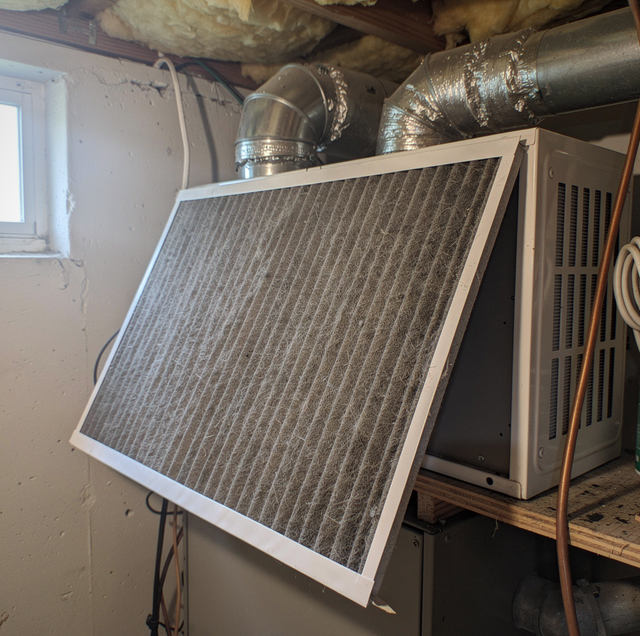
A clogged filter or a coil coated in dust restricts airflow across the coil, and that restriction can significantly reduce efficiency: airflow problems alone can cut a system's efficiency by up to 15 percent. Less air across the coil means less heat picked up per pass, so the compressor needs more passes, more total runtime, to remove the same heat it once handled in fewer hours.
That restriction doesn't just cost you runtime; it can cost you capacity. A coil losing airflow can't shed heat as fast as the compressor keeps adding it, so a system that can't keep up runs continuously instead of cycling normally. Routine cleaning, the kind a seasonal tune-up gives you, keeps that airflow path clear before it turns into a runtime problem.
What Freezes When Airflow Gets Cut Off?
A restricted return, whether from a clogged filter, a closed supply vent, or a blower losing strength, lowers the temperature of the refrigerant passing through the evaporator coil below the point at which moisture in the air freezes on contact with the coil's surface. That thin layer of ice acts as insulation, the opposite of what the coil needs to do its job, so heat transfer between the air and the refrigerant drops even further. The compressor, sensing the house is still warm, keeps running to satisfy the thermostat, but now it's working against its own ice instead of moving heat efficiently. Runtime climbs, cooling output falls, and the two move in opposite directions simultaneously.
Ice on a coil or the line running to the outdoor unit is a sign that airflow or refrigerant charge needs a professional look, not a reason to keep running the system to melt it off. If you see it, that's the cue to call for service, because continuing to run an iced-up system only adds hours to a total already climbing for the wrong reason.
Short-Cycling Multiplies the Draw at Every Restart
A compressor's heaviest draw happens in the first second or two after it starts, when the motor pulls several times its running current to overcome inertia. A system that starts and stops in short bursts, because it's oversized for the space or because a failing capacitor is making it struggle to start cleanly, pays that startup penalty far more often than a system that starts once and runs a full cycle.
Short-cycling shows up on a bill even when the total hours look normal, because the total hides how many of those hours were startup surges rather than steady, efficient operation. A system cycling on and off every few minutes does more electrical work per hour of runtime than one that reaches a stable, efficient run, leaving you with two different totals from identical-looking equipment.
Which Symptom Points to Which Driver
Not every driver behind a bill spike looks the same from the living room. The table below maps what you're noticing to the most likely mechanism behind it, so you know which section above applies before you call anyone.
| What You Notice | Likely Mechanism |
|---|---|
| Bill up, same temperatures as last summer | Heat load from sun, insulation, or attic gain |
| Weak airflow at the vents | A dirty filter or coil restricting air across the coil |
| Ice on the indoor coil or the outdoor line | Airflow or refrigerant restriction freezing condensation on the coil |
| System starts and stops every few minutes | Short-cycling from oversizing or a failing electrical part |
| Spike with no other change at all | Equipment due for its next maintenance interval |
None of these mechanisms rule out the others. A system can be short-cycling due to a dirty coil and icing from the same restricted airflow at the same time. That's usually the pattern behind the largest jump on a single bill.
A Tune-Up Resets the Baseline Before It Resets Itself
A seasonal tune-up addresses several of these mechanisms in a single visit. Cleaning the coil restores the heat transfer a dirty coil was blocking. Clearing and adjusting the blower restores the airflow a restricted return was choking off. A technician also checks whether the refrigerant level is correct, because too much or too little makes a system less efficient, and correcting it isn't something to attempt without the right gauges and training.
None of that work changes how hot a humid summer gets or how long a compressor has to run on a 95-degree afternoon. What it changes is whether that runtime is efficient or wasted, hours spent actually moving heat, not hours spent fighting a dirty coil, a starved return, or its own ice. A system serviced on a regular schedule tends to hold a steadier baseline from one summer to the next, without drifting further every year it goes unchecked.
Energy Star's own maintenance guidance frames the timing simply: have a contractor do a pre-season check-up every year, ideally in spring before the cooling season's heaviest weeks arrive. A system on the right side of that annual line is still running from a real baseline. One that's crossed it, gone a year or more without a look, is already an open question that the next bill will eventually answer.
Frequently Asked Questions
A bill that rises even when you don't change the thermostat is almost always a runtime story, not a setting story. Hotter outdoor air, more direct sun on your house, or a stretch of hot days all add heat load the compressor has to remove, meaning more hours of full electrical draw even though you haven't touched the thermostat at all.
Yes. A clogged filter restricts air moving across your indoor coil, and airflow problems can reduce your system's efficiency by up to 15 percent. Replacing the filter regularly is one of the simplest ways to keep that efficiency loss off your bill.
Runtime tracks heat load, and heat load changes day to day when your thermostat setting doesn't. Your system works harder on a day with more direct sun, higher outdoor temperatures, or a house that sat closed up while everyone was out. More heat coming in means more hours removing it from your home, not a different setting.
It can. Your outdoor unit's coil needs airflow through it to release the heat pulled from inside your home, and that airflow can be blocked by grass clippings, leaves, mulch, or anything piled against your cabinet. A restricted outdoor coil forces your compressor to work harder to reject the same amount of heat.
A healthy system runs in complete cycles, coming on, running until your house reaches the setpoint, then shutting off for a while. Turning on and off every few minutes, especially on a mild day, usually points to oversized equipment or a failing electrical component in your system, and either one adds extra starts your system shouldn't have to make.
Energy Star's maintenance guidance recommends an annual pre-season check-up for your system, ideally before the cooling season's heaviest weeks. A tune-up catches the mechanisms above before they've added hours to your bill: a coil that's started restricting airflow, a refrigerant level that's drifted from correct, connections that have loosened enough to cause extra cycling. Systems serviced on that yearly rhythm tend to hold their efficiency better than systems that only get attention after something in your equipment has already failed, because by then the extra runtime has been building for a while.
Schedule a seasonal AC tune-up in Tampa before peak summer heat arrives — a technician will check airflow, coil condition, electrical connections, and refrigerant charge so your system isn't quietly working harder than it needs to. CMB Air serves Tampa and the Tampa Bay area. Call (813) 447-1443.