
Condensation Dripping From Your Ductwork? What It's Telling You
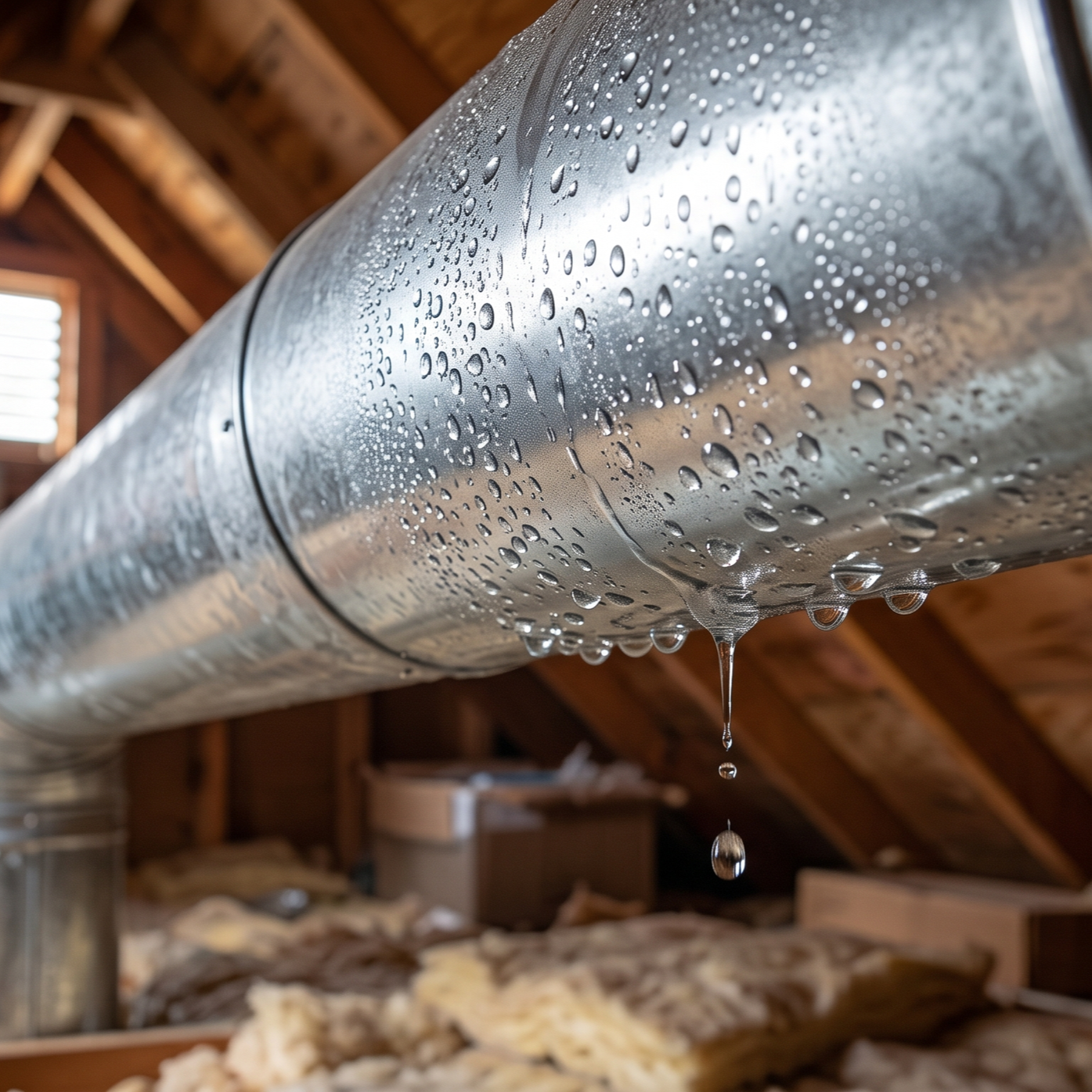
You walk into a room, glance up, and there it is: beads of water clinging to the metal duct overhead, or a spreading brown ring on the ceiling below it. It looks like a leak, but nothing is broken, and no pipe runs through that space. What you are almost certainly seeing is a duct that has started to sweat, and the water is coming out of the air itself.
Before reaching for a bucket or a patch of drywall mud, it helps to understand the mechanism. Sweating ducts are not a random failure. They follow a simple rule of physics, and once you know the rule, both the cause and the fix become clear.
Quick Answer: Ducts sweat when a cold metal surface meets warm, humid air. The moisture in that air condenses on the cold metal, just as water forms on the outside of a cold drink on a summer afternoon. Fix it by keeping humid air away from the cold surface: proper duct insulation with a sealed vapor barrier, sealed air leaks, and controlled humidity in the space the ducts pass through.
The Cold Glass On Your Ceiling
Picture a glass of iced tea sitting on the counter. Within a minute or two, the outside of the glass is wet, even though no water leaked through it. The cold surface chilled the surrounding air below its dew point, the temperature at which air can no longer hold all its moisture, and the excess water vapor condensed on the glass.
Your air ducts do the exact same thing. When the air conditioner runs, the supply ducts carry air that may be in the mid-50s. If those metal or metal-lined ducts run through a hot, humid attic or crawlspace, the surrounding air can be 90 degrees or more and heavy with moisture. The cold duct surface cools the surrounding air below its dew point, causing water to condense on the outside of the duct. Enough of it collects, and it drips.
That is the whole story in one sentence: cold surface, plus warm, humid air, equals condensation. Everything that causes sweating ducts is just a variation on that theme: either the surface is colder than it should be, or the air around it is more humid than it should be, or nothing is keeping the two apart.
Why Your Ducts Are Sweating
Several conditions push a duct across the dew point line. Usually, more than one is at work.
Missing, wet, or compressed insulation- Duct insulation exists to keep the cold metal from ever touching humid air. When ducts run bare, or the insulation has been crushed flat by someone crawling over it, torn during another repair, or soaked and matted from an earlier drip, the cold surface is exposed again. Bare or poorly insulated ducts running through a hot attic sweat the hardest, because there is nothing between the chilled metal and the muggy air.
High humidity in the space around the ducts- The more moisture the surrounding air holds, the higher its dew point, and the easier it is for a duct to reach it. Attics and crawlspaces that are poorly ventilated or that take on moisture from the ground or outside air turn into humidity traps. In that environment, even a decently insulated duct can start to weep.
Air leaks at seams and connections- Gaps at duct joints, boots, and takeoffs do two things at once. They let conditioned air escape, and they let humid attic air get sucked in against the cold interior surfaces. Where that humid air meets cold metal, condensation forms, sometimes inside the duct where you never see it until it stains the ceiling.
Ducts routed through unconditioned space- Any duct traveling through an attic, crawlspace, or unconditioned garage is surrounded by air that the AC is not treating. The larger the temperature difference between the cold air inside the duct and the hot, damp air outside it, the more aggressively the surface pulls water from the surrounding air.
An oversized or short-cycling system- An air conditioner does two jobs: it cools the air, and it removes moisture. Removing moisture takes sustained runtime. A unit that is too large for the home cools the space quickly and then shuts off, so it never runs long enough to remove humidity from the air. The result is a home and attic that stay damp while the metal stays cold, a recipe for constant condensation. Short-cycling from other causes has the same effect.
A backed-up condensate drain masquerading as sweating- Sometimes what looks like sweating ducts is water from a clogged condensate line overflowing the drain pan and tracking along nearby ducts and ceiling framing. This is worth separating out early, because the fix is completely different. More on telling them apart below.
Why It Is Worth Taking Seriously
A little water might not seem urgent, but sweating ducts feed a slow, compounding problem. The condensation soaks the very insulation meant to prevent it, and wet insulation loses most of its value, which makes the sweating worse in a feedback loop. From there, the water works into the ceiling drywall, leaving the brown rings and soft spots that show up as the first visible sign.
The bigger concern is what moisture invites. Steady dampness on insulation, wood framing, and drywall is exactly what mold and mildew need to establish. Once mold takes hold on the paper facing of insulation or in the wrap, wiping the surface does nothing, because the water source is still there. Left alone long enough, chronically wet framing can also soften and rot. The water is a symptom, and the reason to chase it down is everything it quietly damages on the way to becoming visible.
Sweating, A Drain Leak, Or A Refrigerant Problem
Three different problems can cause water to end up where it does not belong, and each is handled differently. Sorting out which one you have is the first real step.
True duct sweating appears as an even film of droplets across the entire cold surface of a duct, heaviest where the insulation is thinnest, and the surrounding air is most humid. It tends to appear along the run, not from a single point.
A condensate drain leak comes from the air handler's drain pan or drain line, not from the duct surface. When the line clogs, the pan overflows, and water drips from around the air handler, often pooling directly beneath it. The water originates at a single location rather than flowing across the entire duct.
A refrigerant problem follows a different pattern again. When a system is low on refrigerant or has poor airflow, the indoor coil can drop below freezing and build up ice. When the system cycles off, that ice melts all at once and drips or overflows, often more water than sweating would ever produce, and usually paired with weak cooling. This one points to the sealed system and is not a moisture-in-the-air issue at all.
How The Fixes Work
Because sweating always comes back to a cold surface plus humid air, every real fix either warms the surface, dries the air, or keeps the two from meeting.
Insulate or re-insulate the ducts- The core fix is to wrap bare or poorly covered ducts with proper duct insulation rated for the job, with the vapor barrier facing intact and continuously sealed. Insulation slows the temperature transfer, and the vapor barrier prevents humid air from ever reaching the metal.
Seal the leaks- Closing gaps at seams, joints, and boots stops humid air from being drawn against cold surfaces and keeps conditioned air where it belongs. Proper mastic or approved sealing tape at the connections addresses the hidden condensation that forms inside leaky ducts.
Control the humidity in the surrounding space- Improving attic or crawlspace ventilation, addressing outside moisture intrusion, and in some cases adding dehumidification, lowers the dew point of the air around the ducts so the surface no longer reaches it.
Clear a clogged condensate drain- If the water is a drain issue, clearing and flushing the condensate line and confirming the pan drains properly stops it. This is a standard part of diagnosis precisely because it so often mimics sweating.
Address oversizing and short-cycling- If the system runs in short bursts and never dehumidifies, correcting the underlying cause so it runs longer, steadier cycles lets it wring moisture out of the air. Where the equipment is truly oversized, that gets factored into any future replacement.
Add a vapor barrier where one is missing- In crawlspaces, especially, laying a ground vapor barrier cuts the moisture rising into the space, which lowers the humidity the ducts have to contend with in the first place.
A quick word on doing this yourself: swapping a length of visible duct wrap in an easy-to-access spot is within a careful homeowner’s reach. But attic and crawlspace work carries real hazards, from heat and footing to buried electrical, and anything involving the air handler's electrical connections or the sealed refrigerant system is licensed-professional territory. Refrigerant, in particular, is federally regulated and can only be handled by EPA-certified technicians. When the sweating traces back to airflow, drainage inside the unit, or refrigerant, that is the point to call a pro.
A Note On Humidity Year-Round
It is tempting to think of sweating ducts as a summer problem, and the hot, sticky months certainly drive the worst of it, when attic temperatures climb, and the air outside is thick with moisture. But humidity is not strictly seasonal. Cooler, damp stretches can leave attics and crawlspaces holding moisture too, and any time the AC is running against humid surrounding air, the same dew-point math applies. Framing the problem around one season misses the point. What matters is the persistent gap between cold duct surfaces and moisture-laden air, and that gap can open up in more than one season. Fixes built around insulation, sealing, and moisture control hold up regardless of the month on the calendar.
Frequently Asked Questions
Timing is the clearest tell. Duct sweating peaks on the hottest, most humid days and eases off after the AC has been shut down for a while and the metal warms back up. A drain leak tracks with runtime instead, dripping whenever the system runs, regardless of how muggy the day is, because the water is coming off the coil rather than out of the surrounding air. To confirm which you have, pull the panel and check the drain pan and its float switch: standing water in the pan or a tripped float switch points to a drain problem, while a dry pan under a weeping duct points to sweating.
The ducts that sweat are the ones sitting in the worst conditions. A run passing through an unconditioned attic or crawlspace, where the surrounding air is hottest and most humid, reaches its dew point long before a run in a conditioned space does. Ducts with thin, crushed, or missing insulation cross that line first as well. So the exposed, poorly insulated runs weep while the ducts in treated, drier space stay dry.
The drain line has a cleanout tee near the air handler, usually a capped fitting a few inches downstream of the pan connection. A technician pulls the cap and flushes the line from there, drawing the clog out with a wet vacuum at the terminal end or blowing it clear with a shot of nitrogen. Below the primary pan sits a secondary drain pan fitted with a float switch, which shuts the system off if the primary line clogs and water backs up. That shutoff is the early warning, tripping before water ever spreads to the ceiling or nearby ducts.
Yes. Duct wrap is rated by R-value, typically R-6 to R-8, and it has a foil-scrim-kraft facing that serves as the vapor barrier. That facing only works if it stays continuous, so its seams get sealed with UL-181 foil tape rather than ordinary cloth duct tape, which dries out and peels. Insulation alone slows heat transfer but still lets humid air migrate through and reach the cold metal, where it condenses underneath the wrap out of sight. The sealed foil facing is what actually blocks moisture from reaching the surface.
Yes. An oversized unit cools the space in short bursts and shuts off before it has run long enough to pull humidity from the air, so the surrounding air stays damp while the ducts stay cold. The fix starts with a Manual J load calculation, which sizes equipment to the actual heat load instead of a rule of thumb. A variable-speed or two-stage system helps further, because it can run for long stretches at low capacity and wring far more moisture out of the air than a single-stage unit that cycles on and off.
Yes. Steady dampness feeds mold, but the facing on the insulation decides how bad it gets. Foil-faced insulation resists mold far better than paper-faced, because mold feeds on the paper itself along with the trapped moisture, so paper-faced wrap gives it both a food source and a wet surface. That is why the fix is to dry the source and replace any insulation that has already grown mold, rather than wiping it. Wiping leaves the colonized paper and the moisture in place, and the growth simply returns.
Have your ducts and drain inspected before the next drip turns into a stain — a proper diagnosis finds the moisture source and stops it at the root. CMB Air serves Tampa and the Tampa Bay area. Call (813) 447-1443.
