
Different Types of AC Systems Available in Tampa, FL
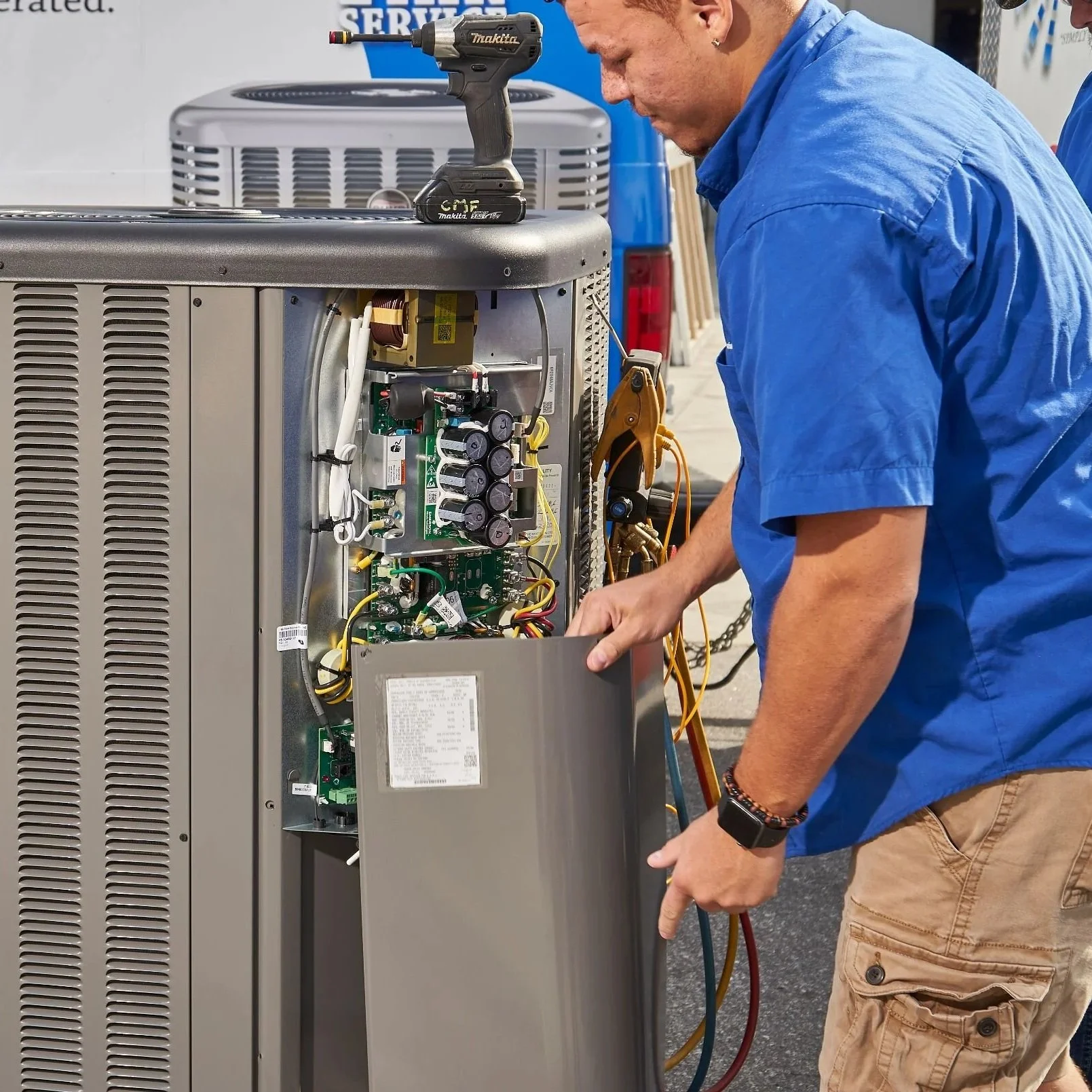
Common AC systems used in Tampa, FL, including central air, ductless mini-splits, heat pumps, and more.
Central Air Conditioning Systems Commonly Found In Tampa Homes
Central air conditioning remains the most familiar system homeowners in Tampa, Florida, ask about, largely because it has been the default choice in many neighborhoods for decades. In practical terms, a central AC system uses a single outdoor condenser paired with an indoor air handler or furnace that distributes cooled air through ductwork. In older Tampa homes, those ducts may run through attics that experience extreme heat and humidity for much of the year, which directly affects how hard the system has to work. When homeowners talk about central air “not keeping up,” the issue often has less to do with the equipment itself and more to do with duct leakage, insulation gaps, or poor airflow caused by years of patchwork modifications. Central systems can cool an entire home evenly when properly designed, but they rely heavily on the integrity of the duct system, which many properties in this region struggle with after decades of renovations.
From a long-term ownership perspective, central air conditioning systems in Tampa tend to reveal their weaknesses slowly rather than all at once. Small airflow restrictions can cause coils to ice over during humid summer afternoons, which leads to compressor strain and shortened equipment life. Homeowners often notice higher energy bills long before a system fully fails, especially when ducts pull hot attic air into the system. Salt air exposure in some coastal parts of the Tampa Bay area also accelerates corrosion on outdoor units, particularly when equipment sits near landscaping that traps moisture. Central AC systems remain a solid option for many homes, but they require regular inspections, careful sizing, and attention to the entire air-delivery system, not just the equipment sitting outside or in a closet.
Another reality with central air conditioning in Tampa, Florida, involves zoning limitations. Most older systems cool the entire home at the same rate regardless of how different spaces are used. Bedrooms that stay empty during the day receive the same cooling priority as kitchens or living rooms full of heat-generating appliances and people. Over time, homeowners attempt to compensate by closing vents or adjusting thermostats frequently, which can create pressure imbalances and further stress the system. When central systems are installed or replaced without addressing these usage patterns, comfort complaints tend to surface quickly. A properly designed central AC system can still serve Tampa homes well, but success depends on more than simply replacing equipment with a newer model.
Heat Pump Systems And Why They Make Sense In Tampa’s Climate
Heat pump systems deserve serious consideration in Tampa, Florida, because the climate aligns well with their operation. Unlike traditional air conditioners paired with gas furnaces, heat pumps move heat rather than generate it. During the long cooling season, they function much like standard air conditioning systems, pulling heat from inside the home and releasing it outdoors. During the shorter winter season, the process reverses, drawing warmth from the outdoor air and transferring it indoors. Tampa’s mild winters allow heat pumps to operate efficiently without the heavy reliance on backup heating systems that colder regions require.
From an installation standpoint, heat pump systems often replace traditional central air systems with minimal changes to existing ductwork, making them appealing to homeowners looking to modernize without a full system overhaul. Problems arise, however, when older duct systems remain undersized or poorly sealed. Heat pumps tend to run longer cycles at lower output levels, which improves efficiency but exposes airflow weaknesses quickly. In Tampa homes with marginal duct design, this can lead to humidity control issues where the home feels cool but clammy. Proper installation emphasizes airflow balance and moisture management, both critical factors in Florida’s subtropical environment.
Long-term performance considerations also set heat pump systems apart. Because the same equipment handles both heating and cooling, wear accumulates year-round rather than seasonally. In Tampa, Florida, systems may run nearly nonstop during peak summer months, which places steady demand on compressors and fan motors. Homeowners who skip routine maintenance often experience premature failures that seem sudden but stem from gradual wear over time. When maintained properly, heat pumps can offer consistent comfort and lower operating costs, particularly in all-electric homes. The key lies in matching system capacity to real-world usage rather than relying on rule-of-thumb sizing that ignores Tampa’s humidity load.
Ductless Mini Split Systems For Zoned Comfort In Tampa Properties
Ductless mini split systems have gained popularity across Tampa, Florida, especially in homes where traditional ductwork poses challenges. These systems consist of an outdoor unit connected to one or more indoor air handlers mounted directly in living spaces. Each indoor unit operates independently, allowing homeowners to control temperatures room by room. In older homes with additions, converted garages, or enclosed porches, ductless systems offer a way to provide reliable cooling without tearing into walls or ceilings to install ducts.
Installation quality plays a major role in how well ductless systems perform in Tampa’s climate. Refrigerant line routing, condensate drainage, and proper placement of indoor units all influence humidity control and long-term reliability. When installers cut corners, homeowners may notice dripping indoor units, uneven cooling, or higher energy use than expected. Tampa’s high humidity means condensate management cannot be treated as an afterthought. Drain lines must maintain proper slope, and outdoor units need adequate airflow to reject heat effectively, especially during extended heat waves.
From a practical ownership perspective, ductless mini split systems change how homeowners think about comfort. Instead of cooling unused rooms, energy goes where it is needed most. This zoning capability often appeals to households with varying schedules or multi-generational living arrangements. Over time, homeowners appreciate the flexibility but must also adapt to maintaining multiple indoor units rather than a single central system. Filters require regular cleaning, and neglect can lead to airflow reduction and moisture buildup inside the units. In Tampa, Florida, ductless systems can perform exceptionally well, but they demand a hands-on approach that differs from traditional central air conditioning.
Packaged AC Units Used In Certain Tampa Home Designs
Packaged air conditioning units occupy a specific niche in Tampa, Florida, particularly in smaller homes, manufactured housing, and some commercial-style residential properties. Unlike split systems, which separate indoor and outdoor components, packaged units contain all major components in a single cabinet, usually installed on a rooftop or a concrete pad near the home. Air distribution still relies on ductwork, but the system footprint simplifies installation in properties with limited interior mechanical space.
The appeal of packaged units often lies in accessibility and simplicity. Service technicians can access all components from a single location, reducing labor time during repairs or maintenance. In Tampa’s hot, humid environment, however, rooftop installations expose equipment to intense sunlight, heavy rain, and airborne debris. Over time, these conditions accelerate wear on electrical components and increase the risk of corrosion. Homeowners sometimes overlook these factors when choosing packaged units based solely on upfront cost or space constraints.
Operationally, packaged AC units cool homes effectively when sized and installed correctly, but they can be less efficient than modern split systems or heat pumps. Duct runs often travel through unconditioned spaces, and any leaks compound energy loss. In Tampa, Florida, where cooling loads remain high for much of the year, small inefficiencies add up quickly on utility bills. Homeowners considering packaged systems should weigh installation convenience against long-term operating costs and exposure-related wear that comes with Florida’s climate.
Variable Refrigerant Flow Systems In Larger Tampa Homes And Mixed-Use Properties
Variable refrigerant flow systems, often shortened to VRF, are increasingly common in larger Tampa, Florida, homes and light commercial spaces where flexibility and efficiency matter. These systems use a single outdoor unit connected to multiple indoor air handlers, similar in concept to ductless mini splits, but with more advanced controls that vary refrigerant flow precisely based on demand. Instead of cycling fully on or off, VRF systems adjust output continuously, maintaining steady indoor temperatures even as outdoor conditions shift throughout the day. In Tampa’s climate, where heat and humidity fluctuate rapidly during summer afternoons, that level of modulation can translate into noticeable improvements in comfort.
Installation complexity separates VRF systems from simpler residential options. Refrigerant piping networks require careful planning, proper insulation, and exact charging to avoid performance issues. Mistakes during installation often show up months later as inconsistent cooling, communication errors between indoor units, or unexplained shutdowns during peak heat. Tampa properties with multiple floors or diverse usage patterns benefit most, but only when the design accounts for long line lengths, elevation changes, and the region’s relentless moisture exposure. Skipping these considerations turns a high-end system into a source of frustration rather than comfort.
From a long-term ownership standpoint, VRF systems demand specialized service knowledge. Not every technician working in Tampa, Florida, has hands-on experience with these systems, which can complicate maintenance and repairs. When serviced correctly, VRF equipment delivers excellent efficiency and zoning control, especially in homes where different areas experience vastly different heat loads. Owners often appreciate quieter operation and tighter temperature control, but they also need to commit to scheduled inspections and software diagnostics to keep the system operating as designed over the long haul.
Hybrid AC Systems Combining Multiple Cooling Approaches
Hybrid air conditioning systems combine elements of different technologies to address specific comfort challenges in Tampa, Florida homes. A common example pairs a traditional central air system with supplemental ductless units in areas that struggle to stay cool, such as upstairs bedrooms or home offices with heavy equipment loads. Instead of forcing one system to compensate for structural limitations, hybrid setups divide the workload based on actual usage patterns. This approach acknowledges the reality that many Tampa homes have evolved through additions, remodels, and repurposed spaces.
Design decisions matter heavily with hybrid systems. Improper coordination between systems can lead to uneven humidity control, competing thermostats, or inefficient runtime patterns. In Tampa’s humid environment, poor synchronization often shows up as moisture problems long before temperature complaints arise. For example, a ductless unit running independently in a bedroom may cool the air quickly without removing enough moisture, while the central system cycles less frequently as a result. Thoughtful system integration addresses these interactions by balancing runtime and airflow rather than treating each system in isolation.
Over time, hybrid systems can extend the lifespan of central equipment by reducing strain during peak demand periods. Homeowners often notice fewer comfort complaints in hard-to-cool zones and more stable energy bills across seasons. Maintenance responsibilities increase slightly due to multiple systems, but the trade-off often feels worthwhile in Tampa, Florida, where architectural quirks and climate pressures collide. Hybrid approaches reward careful planning and ongoing attention, especially when homeowners understand how each component contributes to overall comfort.
FAQs
Systems that run longer cycles at lower output levels tend to manage humidity better in Tampa, Florida. Heat pumps, properly designed central air systems, and well-installed ductless systems often outperform oversized units that cool too quickly without removing enough moisture.
Ductless systems can be very reliable in Tampa when installed correctly and maintained regularly. Proper condensate drainage, airflow placement, and routine filter cleaning play a major role in long-term performance in humid conditions.
Many older homes benefit from duct evaluation or replacement during AC upgrades. Leaky or undersized ducts, common in Tampa properties, reduce efficiency and comfort regardless of how advanced the new equipment may be.
Heat pumps suit Tampa’s mild winters and long cooling seasons well. When sized and installed properly, they provide efficient cooling and adequate heating without relying on fossil fuels.
Salt air, high humidity, and constant operation accelerate corrosion and wear on outdoor components. Regular maintenance and protective coatings help extend system life in coastal parts of Tampa, Florida.
