
What Professional AC Maintenance Includes During A Routine Visit
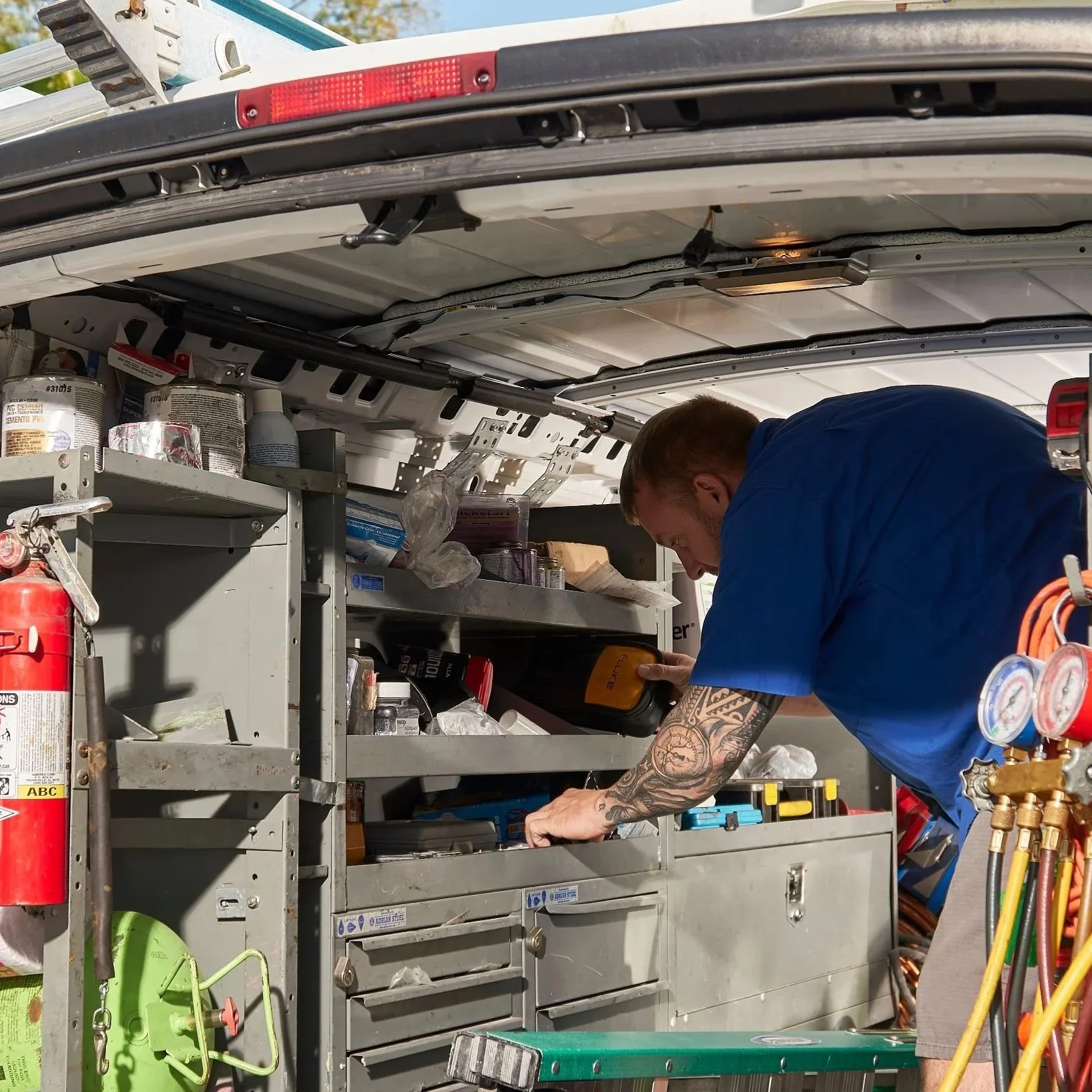
Understanding what professional AC maintenance actually includes makes it a lot easier to see why skipping it is one of the most common and expensive mistakes a homeowner can make.
Your AC ran all summer, and nobody touched it. Now it's struggling, and the bills are climbing.
Most homeowners don't think about their air conditioning until something sounds wrong, feels wrong, or suddenly stops working on the hottest day of the year. By that point, what started as a minor issue that could have been caught during a routine visit has turned into an emergency repair call, a sweaty weekend spent waiting on parts, and a bill that could have been easily avoided. The warning signs were there. The wear was building up quietly inside the unit. A professional AC maintenance visit would have caught it, but maintenance keeps getting pushed off because the system is still running and nothing seems urgent yet.
That line of thinking costs homeowners money every single year. A system that hasn't been serviced is quietly working harder than it needs to, drawing more electricity to deliver the same cooling, wearing down components faster, and building up internal strain that shortens the unit's lifespan. Understanding what professional AC maintenance actually includes makes it a lot easier to see why skipping it is one of the most common and expensive mistakes a homeowner can make.
What Actually Happens When A Technician Shows Up
A lot of homeowners picture a maintenance visit as a technician glancing at the unit for ten minutes and handing over an invoice. That's not what a thorough service call looks like. When a trained technician arrives for routine AC maintenance, the work starts with a complete inspection of both the indoor air handler and the outdoor condenser unit. They're checking for visible damage, corrosion, loose electrical connections, and anything that appears to have been under unusual stress. In older systems, especially when early signs are subtle, knowing where to look is part of what separates a professional inspection from a homeowner glancing at the unit from across the yard.
The evaporator and condenser coils receive close attention because they collect dust, pollen, and airborne debris over a full season of use. That buildup acts like insulation in the worst possible way, blocking the heat transfer on which the refrigeration cycle depends. When heat can't move efficiently through those coils, the compressor works harder to compensate, raising operating temperatures and accelerating wear on one of the most expensive components in the system. A proper coil cleaning during a maintenance visit restores efficiency and takes real load off the compressor.
The Filter Situation Is More Complicated Than Most People Think
Filters are one of those things that homeowners either handle regularly or completely forget about until a technician pulls one out that looks like it hasn't been changed in years. During a routine maintenance visit, the technician inspects the filter and replaces it if needed. But the fuller picture is that the wrong filter, or one that's been left in place too long, does real damage to the system in ways that aren't immediately obvious.
A clogged filter restricts airflow through the air handler. When airflow drops, the evaporator coil can get cold enough to freeze completely, shutting down cooling capacity and causing water damage when it thaws. A filter that's too restrictive for the system, even when brand new, creates the same problem on a slower timeline. Part of what a technician brings to that filter check is the knowledge to confirm the right filter type is being used for that specific system, not just whatever was on sale at the hardware store.
Electrical Components And Connections Don't Announce When They're Failing
Capacitors, contactors, relays, and the wiring connecting them degrade quietly until they can't do their job anymore, and when that finally happens, it's usually during a heatwave. During a maintenance visit, a technician checks all of those components, tests them against their rated specs, tightens any loose connections, and looks for corrosion or heat damage on terminals.
Capacitors alone cause a surprising number of service calls. When one starts to weaken, the motors in the system have to struggle to reach operating speed on every startup, which puts mechanical stress on the motor and draws excess current. A capacitor that reads low during a maintenance check is likely to fail soon, and replacing it during a scheduled visit costs a fraction of what an emergency repair call costs when the system quits on a ninety-degree afternoon.
Drain Lines Get Ignored Until There's Water On The Floor
As the AC runs, moisture condenses off the evaporator coil and drips into a drain pan, then flows out through a small drain line. Over time, algae and debris partially or fully block that line, water backs up into the pan, and eventually overflows into areas it shouldn't. A slow leak from an overflowing drain pan can saturate drywall, damage ceilings, and promote mold growth before anyone realizes what's happening.
During a maintenance visit, the technician flushes the drain line, inspects the pan for signs of past overflow, and confirms drainage is flowing freely. It takes only a few minutes during a full-service call, but it's the kind of step that can prevent thousands of dollars in water damage that would have been completely avoidable.
Refrigerant Levels And What Low Charge Actually Means
A lot of homeowners assume refrigerant gets used up over time, like fuel in a car, and that occasional top-offs are just part of owning an AC system. That assumption is wrong, and it matters. Refrigerant doesn't get consumed. If the charge is low, there's a leak somewhere, and adding refrigerant without finding and fixing the source is a temporary patch that doesn't solve anything.
During a maintenance visit, the technician checks operating pressures, looks for signs of leaks at the coils and line connections, and determines whether the system is holding its charge correctly. Catching a small leak early, before it drops the charge far enough to damage the compressor, is one of the highest-value outcomes a routine maintenance visit can deliver.
Thermostat Accuracy Is Quietly Costing You Money
A thermostat reading room temperature even two or three degrees off from actual conditions can cause the system to run significantly longer than necessary, or to short-cycle, which can wear on the compressor. During a maintenance visit, the technician tests the thermostat's accuracy in reading ambient temperature and verifies that the system responds correctly to its signals.
Programmable and smart thermostats get a second look, too. A schedule set up two or three years ago may no longer match how the household actually uses the space. Cleaning up outdated programming during a maintenance visit eliminates unnecessary runtime and shows up as real savings on the energy bill without any change in comfort.
What Happens When Maintenance Gets Skipped Year After Year
The most common reason homeowners skip annual AC maintenance is that the system is still running and nothing appears to be broken. That logic misses how wear actually builds inside mechanical systems. Coil fouling, electrical degradation, drain-line buildup, and refrigerant-side issues don't occur all at once. They develop gradually and compound each other. A system running with dirty coils, a weakening capacitor, and a partially blocked drain line isn't going to last as long as one that gets serviced annually, and it consumes more electricity every month until it finally gives out.
A properly maintained system runs more efficiently, experiences fewer unexpected breakdowns, and has components that last longer before needing replacement. Routine maintenance is one of the few home services where the cost of the visit is reliably lower than the cost of skipping it, and the benefits show up both immediately in performance and over the long run in how long the equipment holds up.
Act Now: AC Maintenance Questions That Prevent Expensive Breakdowns
How often should AC maintenance be scheduled?
Most systems benefit from at least one professional visit per year, ideally in the spring before the cooling season starts. Systems that run year-round or are more than ten years old may benefit from twice-annual service.
What happens if a refrigerant leak goes unaddressed?
The compressor ends up running outside its designed parameters, building internal heat and pressure over time. That leads to compressor failure, which is one of the most expensive repairs an AC system can need.
Can a homeowner handle any part of AC maintenance on their own?
Filter changes are appropriate between professional visits, provided the correct filter type is used. Electrical testing, coil cleaning, refrigerant checks, and drain line flushing all require proper tools and training to be done safely.
Why does the electric bill go up when the AC hasn't been serviced?
Dirty coils, a restricted filter, and worn electrical components all force the system to work harder for the same output. Each factor increases energy consumption on its own, and when they stack up, the effect on monthly bills adds up quickly.
Is maintenance worth it on an older AC system?
Yes. Older systems have more accumulated wear, making inspections more likely to catch something meaningful before it becomes a breakdown. It also allows a technician to give an honest read on how much useful life the system has left.
CMB Air is a state-licensed, insured, and bonded company providing AC refrigerant leak repair, AC fan motor, AC condenser repair or replacement, AC circuit control board, AC tune-up and preventative maintenance, evaporator coil, and condenser coil services in Tampa and surrounding areas. We are dedicated to serving our customers, providing them with solutions that meet the highest industry standards. Call today!